
Selling Your House to Avoid Bankruptcy in Albuquerque: What To Know First
When the bills keep piling up, bankruptcy can start to feel like the only way out, and the house is usually the biggest thing on the table. Maybe you are behind on credit cards, medical bills or a second mortgage, a creditor has a judgment against you, or a job loss has made the payments impossible, and you are wondering whether selling the house first could help.
Whether the house is in Albuquerque, Rio Rancho, the East Mountains, Valencia County or elsewhere in New Mexico, questions like how much equity you have, what the New Mexico homestead exemption protects, what happens to the house in Chapter 7 or Chapter 13, and whether selling before filing makes sense are worth answering before you decide. Selling does not always avoid bankruptcy, and bankruptcy is sometimes the right tool. This guide explains the basics so you can have a better conversation with a bankruptcy attorney.
This guide explains:
✅Selling before filing vs. after filing
✅Chapter 7 trustees and Chapter 13 plans
✅Equity and the NM homestead exemption
✅Liens, judgments and the mortgage at closing
✅Credit impact in general terms
✅Talking to an attorney and a housing counselor
✅How our in-person process works
Worried About Bankruptcy? Let's Look at Your Options for the House.
Whether you are behind on several debts, dealing with a judgment or already talking to a bankruptcy attorney, we'll walk through your options for the house at your pace and help you understand your next steps. There is no pressure to decide anything on the first call.
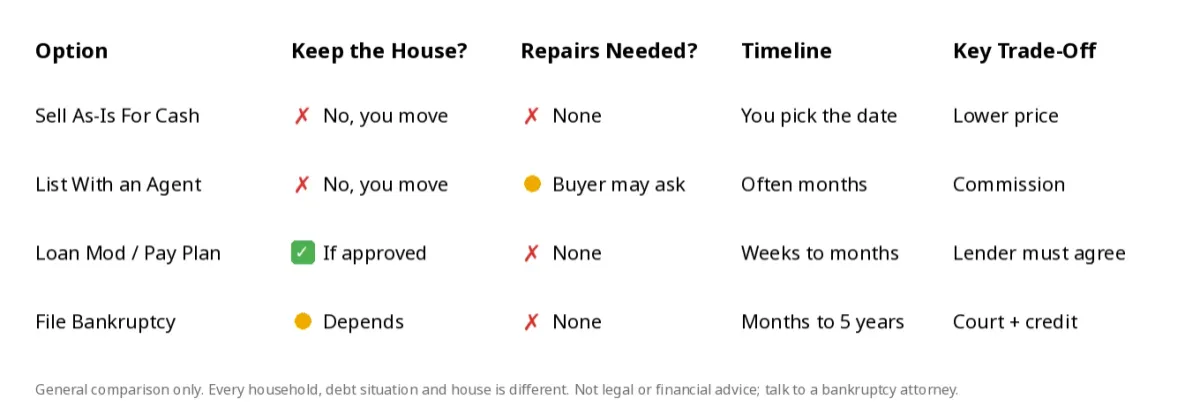
Options for Your House When Bankruptcy Is on the Table
Some homeowners work out a payment plan or loan modification and keep the house. Others list it with an agent, sell it as-is for cash, or keep it and file bankruptcy with an attorney. The right path depends on your equity, your debts and your goals, so it helps to know the options before you decide.
1. Get a Clear Picture of Your Debts and Equity
Before anything else, list what you owe and what the house might sell for. The difference after the mortgage, liens and selling expenses is your equity, and it shapes almost every option, including whether bankruptcy would put the house at risk.
Papers homeowners often gather:
- Recent mortgage statements and any second mortgage or HELOC
- Credit card, medical and collection statements
- Any lawsuit papers or judgments
- Property tax bills and proof of income
2. Talk to Your Lender and Creditors
Some homeowners first try to:
- Ask the servicer about a loan modification or forbearance
- Set up a payment plan with other creditors
- Meet with a HUD-approved housing counselor
- Cut expenses or bring in more income
These steps can sometimes ease the pressure without selling or filing, but they depend on the lender and creditors agreeing, and they take time while interest and fees may keep adding up.
3. Sell the House or Keep It and File
Homeowners often weigh things like:
- How much equity they have and whether it would be protected
- Whether they can afford the house going forward
- A house that needs more work than they can pay for
- Whether a fresh start somewhere smaller makes more sense
4. Legal & Financial Help
Bankruptcy is a legal process with lasting effects, and the timing of a sale can matter a great deal. Talk to a New Mexico bankruptcy attorney before you sell, file or move money around. This page is general information, not legal or financial advice.
Helpful Resources:
Selling Before vs. After Filing: Chapter 7 & Chapter 13
Most homeowners who file use Chapter 7 or Chapter 13. In Chapter 7, a trustee is appointed and your house becomes part of the bankruptcy estate. If there is equity above what your exemptions protect, the trustee may sell the house to pay creditors, and you generally cannot sell it on your own. In Chapter 13, you usually keep the house and repay creditors through a court-approved plan over three to five years; selling during the case generally needs the court's approval. Selling before you file can give you more control over the price and timing, but the sale proceeds and any recent transfers or payments to creditors or family may be reviewed if you file later.
Typical steps:
- List your debts, income and the value of the house
- Talk to a bankruptcy attorney before you sell or file
- Complete credit counseling from an approved agency within 180 days before filing
- Ask whether your equity would be protected in Chapter 7 or Chapter 13
- If you sell, keep records of where the money goes
- Open title with a title company before you sign a sale contract
Federal overview of Chapter 7 (liquidation):
U.S. Courts: Chapter 7 Bankruptcy Basics
Federal overview of Chapter 13 (repayment plan):
U.S. Courts: Chapter 13 Bankruptcy Basics
Approved credit counseling agencies (required before filing):
Equity, the NM Homestead Exemption & Why They Matter
Equity is what the house is worth minus the mortgage and liens. New Mexico's homestead exemption (NMSA 42-10-9) protects a set amount of equity in your primary residence from creditors and from a bankruptcy trustee. The statute sets it at $150,000, with a higher amount in some cases, and the dollar amounts are adjusted for inflation every two years, so ask your attorney for the current figure. It does not protect you from your mortgage lender or other properly recorded secured liens. See the NM Courts exemption notice (NMSA 42-10-9).
Equity may matter more when:
- The house is paid off or nearly paid off
- Home values have gone up since you bought
- Your equity is more than the exemption may protect
- The house is not your primary residence
Questions to bring to a bankruptcy attorney:
- How much of my equity would be protected?
- Should I use state or federal exemptions?
- Would Chapter 7 or Chapter 13 fit my situation?
- What happens if I sell before I file?
- Are any of my liens or judgments avoidable?
- How would a sale affect my plan or my discharge?
- Which debts would be wiped out and which would stay?
Liens, Judgments & the Mortgage at Closing
When a house sells, the title company pays off the mortgage, any second mortgage, recorded judgment liens, tax liens and other liens from the sale proceeds before the seller receives anything. In New Mexico, a creditor who wins a lawsuit can record the judgment with the county clerk, and it can become a lien on your house. Unsecured debts like most credit cards and medical bills are not paid at closing unless they have become a recorded lien. If liens add up to more than the house is worth, a sale may need lender approval or may not solve the problem, which is one reason to get advice early.
What homeowners often need to check:
- The mortgage payoff and any second mortgage or HELOC
- Recorded judgments or tax liens on the property
- Property taxes owed and when the next half is due
- Which debts are secured by the house and which are not
Helpful local resources:
Bernalillo County Clerk: Recording & Filing (recorded liens)
Can You Sell Your House As-Is Before Filing?
In many cases, yes.
Some New Mexico homeowners choose a direct cash sale in order to:
- Skip repairs they cannot afford right now
- Pay off the mortgage and liens from the proceeds
- Stop the monthly mortgage, tax and insurance payments
- Avoid showings, buyer inspections and loan approval
- Pick a closing date that works with their plans
Selling may still be possible even if:
- You are behind on the mortgage
- A creditor has recorded a judgment
- The house needs major repairs
- Property taxes are behind
- You have already met with a bankruptcy attorney
- You have already filed (with trustee or court approval)
We meet sellers in person at their homes, and we can work with your attorney on timing. A sale is not always the right answer, and it does not always avoid bankruptcy, so we encourage you to get legal advice before you sign anything.
Credit Impact & Talking to a Bankruptcy Attorney
Late payments, collections, judgments and bankruptcy can all show up on your credit report. A bankruptcy can stay on a credit report for up to 10 years and can make new credit harder to get for a while. Selling the house and paying debts may limit some of the damage, but it will not erase late payments that are already reported, and every situation is different.
Common issues include:
- Worry about losing the house in bankruptcy
- Keeping a car and retirement accounts
- Deciding whether to sell first or file first
- How long a bankruptcy stays on a credit report
- A spouse who is not filing
A New Mexico bankruptcy attorney can review your income, debts, exemptions and goals and tell you what applies to you. Many have a free or low-cost first consultation, and New Mexico Legal Aid may help if you qualify. A HUD-approved housing counselor can also review your budget and talk with your mortgage servicer at little or no cost.
Helpful resource:
Questions To Ask Before You Decide
Before selling or filing, homeowners usually think about:
- What the house would sell for as-is and after repairs
- How much would be left after the mortgage and liens
- Whether that amount would be protected in bankruptcy
- Where they would live next and what it would cost
- Whether the rest of their debts would still be a problem
- How a sale fits with the advice of their attorney
- How much time they have before the next deadline
Common sources of stress include:
- Collection calls and letters
- A lawsuit or recorded judgment
- Falling behind on the mortgage or property taxes
- A distressed house that needs repairs they cannot afford
- Not knowing which debts the house is tied to
- Not knowing what the house is worth as-is
Sell As-Is for Cash, List, Modify the Loan, or File?
Making repairs and listing on the MLS can bring the highest price, but it usually means you:
- Pay for repairs and updates up front
- Keep paying the mortgage, taxes and insurance
- Pay a listing commission when it sells
- Wait for a buyer, inspections and loan approval
- Keep the house show-ready for weeks or months
A loan modification or payment plan can let you keep the house if the lender agrees, and bankruptcy may let you keep it or give you a fresh start, depending on the chapter and your equity. A direct cash sale trades some of the top price for speed and certainty: no repairs, no showings, no waiting on a buyer's loan, and a closing date you choose.
Ethan is also a licensed New Mexico real estate broker, so he can walk you through the selling paths, while your attorney advises you on bankruptcy.
Albuquerque & New Mexico Bankruptcy and Debt Resources
Courts, counselors and legal help homeowners may contact:
Bankruptcy: U.S. Courts Bankruptcy Basics · U.S. Bankruptcy Court, District of New Mexico
Housing counseling: HUD Housing Counselors · CFPB Find a Housing Counselor
Legal help: State Bar of New Mexico · New Mexico Legal Aid
Important Reminder
Every household and every debt situation is different.
Your equity, the mortgage, recorded liens, the type of debts you have, your income and the condition of the house can all affect your price, timeline and options.
Selling does not always avoid bankruptcy, but the earlier you review your situation with an attorney, the more options you may have available.
FAQ
Can selling my house help me avoid bankruptcy?
Sometimes. If you have enough equity, a sale can pay off the mortgage and liens and leave money for other debts. But if you owe more than the house can cover, or most of your debts are not tied to the house, selling may not be enough. A bankruptcy attorney can tell you whether selling, filing or both makes sense.
Can I sell my house during Chapter 7 or Chapter 13?
Usually not on your own. In Chapter 7, the house becomes part of the bankruptcy estate and the trustee controls any sale. In Chapter 13, you generally need the court's approval to sell during your plan. Your attorney handles those requests.
What does the New Mexico homestead exemption protect?
Under NMSA 42-10-9, it protects a set amount of equity in your primary residence from most creditors and a bankruptcy trustee. The statute sets $150,000, adjusted for inflation every two years. It does not protect against your mortgage or other properly recorded secured liens. Ask your attorney for the current amount.
Should I sell my house before filing bankruptcy?
It depends. Selling first can give you more control over the price and timing, but the cash from a sale may not be protected the same way home equity is, and recent transfers or payments can be reviewed if you file. Talk to a bankruptcy attorney before you sell.
Will a judgment or lien stop me from selling?
Not usually. Recorded judgments and liens are normally paid from the sale proceeds at closing. If the liens add up to more than the house is worth, the lienholders may need to agree to a payoff, so it helps to know the numbers early.
How does your process work if I am thinking about bankruptcy?
Call (505) 300-2234 or send us the address. We meet sellers in person at their homes, so Ethan meets you at the house, looks it over and goes over your numbers and options. You don't need to fix anything first. If a cash sale fits, you choose the closing date, and we can coordinate timing with your attorney.
Ready To Talk About the House?
If you are behind on debts, facing a judgment or thinking about bankruptcy, understanding your options for the house early can give you more choices and more control.
Some homeowners choose to:
- sell without making repairs
- pay off the mortgage and liens at closing
- stop the monthly house payments
- move on to a more affordable home
- avoid showings and waiting on a buyer's loan
- sell as-is for cash on their own timeline
Every situation is different, so talk to a bankruptcy attorney about your debts before you decide.
Ready To Sell Your House Fast In Albuquerque?
Get a fair cash offer from a local Albuquerque home buyer.
No pressure. No obligation.
Follow Us


Other
We Help With
We Buy Houses In
This is not legal, financial, or tax advice. For specific answers tailored to your situation, we always recommend consulting your trusted professionals. Some members of NM Cash Offer LLC are licensed real estate brokers in the State of New Mexico. NM Cash Offer LLC does not represent any Sellers in this transaction unless a separate written listing agreement is executed. Click to see Broker Disclosure.
© Copyright 2026 NM Cash Offer LLC. All Rights Reserved.