
Selling a Rental Property as a Tired Landlord in Albuquerque
Owning a rental can stop feeling like an investment and start feeling like a second job. Late rent, problem tenants, turnover, repairs and vacancy can wear down even experienced Albuquerque landlords, and New Mexico's Uniform Owner-Resident Relations Act sets the rules for leases, notices, deposits, entry and evictions (NM Courts: Landlord-Tenant).
Being a tired landlord does not mean you are out of choices. This guide explains how New Mexico treats leases, notices and evictions, what selling a rental with tenants in place looks like, and how owners in Albuquerque, Rio Rancho and nearby towns compare keeping the rental, hiring a property manager, listing it or selling it as-is for cash.
This guide explains:
✅Problem tenants and late rent
✅How New Mexico evictions work
✅Vacancy, turnover and repairs
✅Selling a rental with tenants in place
✅Deposits, leases and showings
✅Tax and 1031 questions to take to a CPA
✅Keep renting, hire a manager, list or sell as-is
Tired of Being a Landlord? Let's Look at Your Options.
Whether it's a tenant who stopped paying, a unit that keeps sitting empty or repairs that never seem to end, we'll walk through your options for the rental at your pace and help you understand your next steps. Partners and family members are welcome on the call or the visit, and there is no pressure to decide anything on the first call.
Options for Tired Landlords
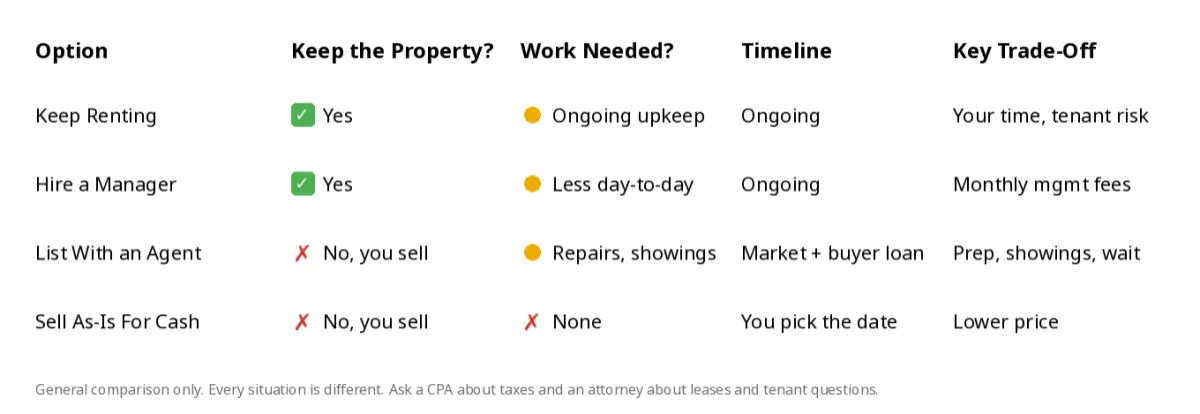
Some landlords keep renting and tighten up their screening and leases. Others hand the day-to-day work to a property manager, list the property with an agent once it is vacant and repaired, or sell it as-is for cash, often with the tenants still in place. The right path depends on the leases, the tenants, the condition of the property, your equity, your taxes and your goals.
1. Start With the Leases and the Rent Ledger
Before deciding anything, gather what you have: each lease, the rent ledger, the deposits you hold and any notices you have served. In New Mexico, either side can end a month-to-month tenancy with written notice at least 30 days before the periodic rental date, and a week-to-week tenancy with written notice at least seven days before the termination date (NMSA 47-8-37). A lease with a set end date generally runs until that date unless it is ended for a reason the law allows, so the leases often shape your timeline.
Things landlords often do first:
- Pull every lease and note the end dates
- List rent owed, deposits held and who pays utilities
- Make copies of any notices already served
- Walk the property and note the repairs needed
2. Know the Notice and Entry Rules
Questions landlords often ask:
- How much notice does a tenant need to move out?
- What notice applies to unpaid rent?
- Can I show the unit to buyers while it is occupied?
- What do I owe the tenant on the deposit?
For unpaid rent, New Mexico requires a written three-day notice, and if the tenant pays the full amount due in the manner stated in the notice before it runs out, the owner cannot bring an action for that nonpayment. Most other lease violations start with a written seven-day notice to fix the problem (NMSA 47-8-33). To show an occupied unit to buyers, the owner generally must give the tenant 24 hours' written notice of the intent to enter, the purpose, the date and a reasonable estimate of the time, unless the owner and tenant agree otherwise (NMSA 47-8-24).
3. Keep, Hand Off, List or Sell
Landlords often weigh things like:
- How much time the rental takes each month
- Upcoming repairs, turnover costs and vacancy
- A property with more repairs than they want to take on
- How much equity is left after the home loan and any liens
4. Taxes, Legal Help & Tenant Questions
Selling a rental can have tax effects. The IRS says depreciation you deducted, or could have deducted, lowers your basis in the property, which affects the gain when you sell (IRS Publication 527), and that a like-kind (1031) exchange applies only to real property held for business or investment (IRS: Like-Kind Exchanges). Talk to a CPA about how this applies to you before you sell. For lease, notice or eviction questions, consult an attorney. This page is general information, not legal, tax or financial advice.
Helpful Resources:
How Evictions Work in New Mexico
New Mexico's courts say a landlord must go to court before evicting a tenant. The process starts with a written notice: a 30-day notice ending the tenancy, a 7-day notice of a lease violation, a 3-day notice of nonpayment of rent, or a 3-day notice of a substantial violation. After the notice period ends, the owner can file a Petition by Owner for Restitution, and the court papers must be served on the tenant at least 7 days before the hearing; the landlord and the landlord's employees cannot serve them (NM Courts: Landlord-Tenant). If a tenant commits a second material violation within six months of the first, the owner can give a written notice ending the rental agreement in not less than seven days (NMSA 47-8-33). In Albuquerque, the Bernalillo County Metropolitan Court hears landlord/tenant disputes along with other civil cases up to $10,000 (Metro Court: How to File a Lawsuit).
Common reasons Albuquerque landlords get tired:
- Tenants who pay late or stop paying
- Damage beyond normal wear and tear
- Months of vacancy between tenants
- Repair calls at all hours
- Living out of town from the rental
- An inherited rental they never planned to manage
Read the New Mexico landlord-tenant rules:
NM Courts: Landlord-Tenant Self-Help (Uniform Owner-Resident Relations Act)
Landlord-tenant cases in Albuquerque:
Bernalillo County Metropolitan Court: Civil Unit
Court forms for landlords and tenants:
Problem Tenants, Deposits and Damage
Problem tenants are one of the most common reasons owners decide to sell. If a tenant knowingly commits, or consents to someone else committing, a substantial violation, the law allows a written notice ending the rental agreement in not less than three days, subject to defenses listed in the statute (NMSA 47-8-33). Someone living in the rental who is not on the lease is handled differently: the courts' self-help page says they cannot be evicted like tenants and are removed through a Complaint in Forcible Entry (NM Courts: Landlord-Tenant). When a tenancy ends, the owner may apply the deposit to unpaid rent and damages, but not to normal wear and tear, and must send an itemized written list of deductions and any balance within 30 days; missing that deadline forfeits the right to withhold any part of the deposit. On a rental agreement shorter than one year, the deposit cannot be more than one month's rent (NMSA 47-8-18).
Tenant problems matter when:
- You want to sell on a set date
- Rent is behind and the notices keep piling up
- The unit needs repairs before anyone else can live there
- Someone is living there who is not on the lease
Papers that help when you sell a rental:
- Every current lease and any amendments
- The rent ledger and a list of deposits held
- Copies of any notices or court papers
- Repair invoices and estimates
- Photos of the condition of each unit
- Contact details for each tenant
- Utility account details and who pays what
Vacancy, Turnover and Repairs
Under New Mexico law, the owner of a rental generally must comply with housing codes that materially affect health and safety, make repairs to keep the premises safe, keep the plumbing, electrical, heating and other supplied systems and appliances in good working order, and supply running water and a reasonable amount of hot water (NMSA 47-8-20; Metro Court: Tenant's Guide to the Eviction Process). That work does not stop between tenants: turnover cleaning, repairs and months without rent can add up quickly on an older house. If a rental was left packed with belongings or debris, our guide to selling a hoarder house covers heavy cleanouts, a fire at the property is covered in our fire-damaged house guide, and a unit sitting empty for months may fit our vacant and abandoned property guide.
What landlords often run into:
- Units left dirty or damaged after move-out
- Older heating, cooling or water heaters that need replacing
- Months of carrying costs with no rent coming in
- Repair bids that cost more than the rental earns
Helpful local resources:
NMSA 47-8-20: Owner Obligations to Renters
City of Albuquerque: Code Enforcement
Metro Court: Tenant's Relief and Response to the Eviction Process
Can You Sell a Rental With Tenants in Place?
In many cases, yes.
Some New Mexico landlords choose a direct cash sale in order to:
- Sell without waiting for the lease to end
- Skip turnover repairs and make-ready work
- Avoid repeated showings in an occupied unit
- Avoid inspection repair requests and a buyer's loan approval
- Pick a closing date that works for them
Selling may still be possible even if:
- The tenant is behind on rent
- The lease still has months left on it
- The property is vacant and needs work
- You own more than one rental and want to sell them together
- Property taxes have fallen behind too (selling with back taxes)
- The house needs repairs or a full cleanout
A sale generally does not cancel an existing lease, so a buyer of an occupied rental usually takes it with the tenants in place, and prorated rent and deposits are handled at closing as the purchase agreement sets out; consult an attorney about how this applies to your leases. Selling as-is usually means a lower price than a fully updated, vacant house would bring, in exchange for less work, fewer steps and a date you choose. We meet sellers in person at the property, walk through it with you while respecting your tenants' notice rights, and look at the leases and the rent ledger together.
Rio Rancho, Multi-Unit and Out-of-Town Landlords
The Uniform Owner-Resident Relations Act covers rentals in Rio Rancho, Albuquerque and the rest of New Mexico, so the same notice, deposit and eviction rules apply across the metro (NM Courts: Landlord-Tenant). Out-of-town owners often find it hard to give 24-hour written entry notices, keep up with repairs and attend court dates from a distance (NMSA 47-8-24). Owners with several doors face the same rules on every unit; our multifamily property page covers selling small apartment buildings, and our New Mexico rental property selling guide goes deeper on leases, Section 8 and occupied sales.
Common issues include:
- Managing repairs and showings from out of town
- Tenants with different lease end dates
- One problem unit dragging down the whole building
- Notices and court dates that are hard to attend
- An inherited rental that came with tenants
If you inherited the rental, our probate and inheritance guide explains how estates work, and our code violations guide covers city notices that can follow a rental left in poor shape.
Helpful resource:
Questions To Ask Before You Decide
Before keeping, handing off, listing or selling, landlords usually think about:
- What the rental actually nets after repairs, vacancy and time
- When each lease ends and what notice applies
- What repairs are coming in the next few years
- What the property would sell for as-is, occupied, and after repairs
- How much equity is left after the home loan and any liens
- Who is on title and needs to sign
- What a CPA says about taxes on the sale
Common sources of stress include:
- Late-night repair calls and tenant complaints
- Late rent, notices and court dates
- Units sitting empty between tenants
- A distressed property that needs more work than it earns
- Title problems from old liens or recorded documents
- Not knowing what the rental is worth as-is
Keep Renting, Hire a Manager, List or Sell?
If you are deciding, landlords usually:
- Add up a year of rent, repairs, vacancy and time spent
- Ask a property manager what they would handle and charge
- Ask a CPA about taxes and 1031 questions before selling
- Consult an attorney about lease, notice or eviction questions
- Compare what the rental earns with what it would sell for
Keeping the rental can make sense when the tenants pay, the property is in good shape and you have the time. A property manager can take over the day-to-day work for a fee, though the repairs and the risk stay with you as the owner. If the loan payments on the rental are getting hard to keep up with, our guide for owners behind on payments explains the options. Listing with an agent may bring a higher price if you can wait for the lease to end, make repairs and handle showings, while a direct cash sale trades some of the top price for speed and simplicity: no repairs, no showings and a closing date you choose.
Ethan is also a licensed New Mexico real estate broker, so he can walk you through the selling paths, while a CPA answers tax questions and an attorney answers lease and eviction questions.
Albuquerque, Rio Rancho & New Mexico Landlord Resources
Rules, offices and help landlords may use:
New Mexico law: NM Courts: Landlord-Tenant Self-Help · NMSA 47-8-18: Deposits · NMSA 47-8-20: Owner Obligations · NMSA 47-8-24: Right of Entry · NMSA 47-8-33: Breach by Resident · NMSA 47-8-37: Notice of Termination
Courts, forms & taxes: Metro Court: Civil Unit · Metro Court: How to File a Lawsuit · NM Courts: Landlord/Tenant Forms · IRS: Like-Kind Exchanges · IRS Publication 527: Residential Rental Property
Legal help: State Bar of New Mexico · Lawyer Referral for the Public · New Mexico Legal Aid
How Our Process Works · We Buy Houses in Albuquerque · Sell a House Fast in Rio Rancho · Contact Us
Important Reminder
Every rental and every tenancy is different.
The lease terms, the tenants, the condition of the property, your equity, your tax picture and who needs to sign can all affect your price, timing and options.
The earlier you review your leases, talk with a CPA and get good information, the more options you may have available.
FAQ
Can I sell my rental property in Albuquerque with tenants still living there?
Usually, yes. A sale generally does not end an existing lease, so the buyer typically takes the property with the tenants in place, and prorated rent and deposits are handled through the purchase agreement at closing. To show an occupied unit, New Mexico law generally requires 24 hours' written notice to the tenant unless you and the tenant agree otherwise.
What notice does a New Mexico landlord have to give before an eviction?
It depends on the reason. New Mexico uses a 3-day notice for nonpayment of rent, a 7-day notice for lease violations, a 3-day notice for a substantial violation and a 30-day notice to end the tenancy. After the notice period ends, the owner can file a Petition by Owner for Restitution, and the tenant must be served at least 7 days before the hearing.
Can I change the locks or turn off utilities to get a tenant out?
No. The New Mexico courts' self-help page says a landlord must go to court before evicting a tenant, and the Metropolitan Court's tenant guide says a tenant who is illegally locked out or has utilities wrongfully disconnected can ask the court for damages and to move back in. Consult an attorney before taking any step to remove a tenant.
When do I have to return a tenant's deposit in New Mexico?
If you keep any part of it, you must send an itemized written list of deductions and the balance within 30 days of the end of the rental agreement or the tenant's departure, whichever is later. A deposit cannot be kept for normal wear and tear, and missing the 30-day deadline forfeits the right to withhold any part of it. When you sell, the purchase agreement should spell out how deposits are handled.
Do I owe taxes when I sell a rental property?
It depends on your situation, so talk to a CPA before you sell. The IRS says depreciation you deducted, or could have deducted, lowers your basis in a rental, which affects the gain on a sale, and a like-kind (1031) exchange applies only to real property held for business or investment. We do not give tax advice.
How does your process work if I want to sell my rental?
Call (505) 300-2234 or send us the address. We meet sellers in person at their properties, so Ethan meets you at the rental, walks through it with you while respecting your tenants' notice rights, looks at the leases and the rent ledger, and goes over your numbers and options. You don't need to wait for the lease to end or make repairs first, and if a cash sale fits, you choose the closing date.
Ready To Talk About Your Options?
If problem tenants, vacancy or never-ending repairs are making the rental hard to keep, understanding your options early can give you more choices and more control.
Some landlords choose to:
- keep renting with better screening and leases
- hire a property manager for the day-to-day work
- sell with the tenants still in place
- skip repairs, turnover and showings
- avoid waiting on a buyer's loan approval
- sell as-is for cash on their own timeline
Every situation is different, so talk with a CPA about taxes and consult an attorney about lease and eviction questions before you decide.
Ready To Sell Your House Fast In Albuquerque?
Get a fair cash offer from a local Albuquerque home buyer.
No pressure. No obligation.
Follow Us


Other
We Help With
We Buy Houses In
This is not legal, financial, or tax advice. For specific answers tailored to your situation, we always recommend consulting your trusted professionals. Some members of NM Cash Offer LLC are licensed real estate brokers in the State of New Mexico. NM Cash Offer LLC does not represent any Sellers in this transaction unless a separate written listing agreement is executed. Click to see Broker Disclosure.
© Copyright 2026 NM Cash Offer LLC. All Rights Reserved.