
Sell a Fire-Damaged House in Albuquerque
A house fire turns life upside down. Once everyone is safe, you are left with a damaged home, an insurance claim, a mortgage that is still due, and decisions about repairs.
Whether the fire was in one room or the whole structure, and whether your house is in Albuquerque, elsewhere in Bernalillo County or in Rio Rancho, issues like smoke and water damage, a slow or short claim payout, or an unsafe-structure notice from the city can make the next step hard to see. Knowing how those pieces work helps you choose between repairing with insurance money, listing the house, or selling it as-is for cash.
This guide explains:
✅Insurance claims, payouts and deadlines
✅Your mortgage after a fire
✅Unsafe, condemned or board-up notices
✅Smoke, soot and water damage
✅Cleanup and securing the property
✅Repair, list or sell as-is
✅How our in-person process works
House Damaged by Fire? Let's Look at Your Options.
Whether you're waiting on an insurance adjuster, got a board-up or unsafe-structure notice, can't afford the gap between the claim and the repair bids, or just don't want to rebuild, we'll walk through your options and help you understand your next steps.
Ready To Sell Your House Fast In Albuquerque?
Get a fair cash offer from a local Albuquerque home buyer.
No pressure. No obligation.
Follow Us


Other
We Help With
We Buy Houses In
This is not legal, financial, or tax advice. For specific answers tailored to your situation, we always recommend consulting your trusted professionals. Some members of NM Cash Offer LLC are licensed real estate brokers in the State of New Mexico. NM Cash Offer LLC does not represent any Sellers in this transaction unless a separate written listing agreement is executed. Click to see Broker Disclosure.
© Copyright 2026 NM Cash Offer LLC. All Rights Reserved.
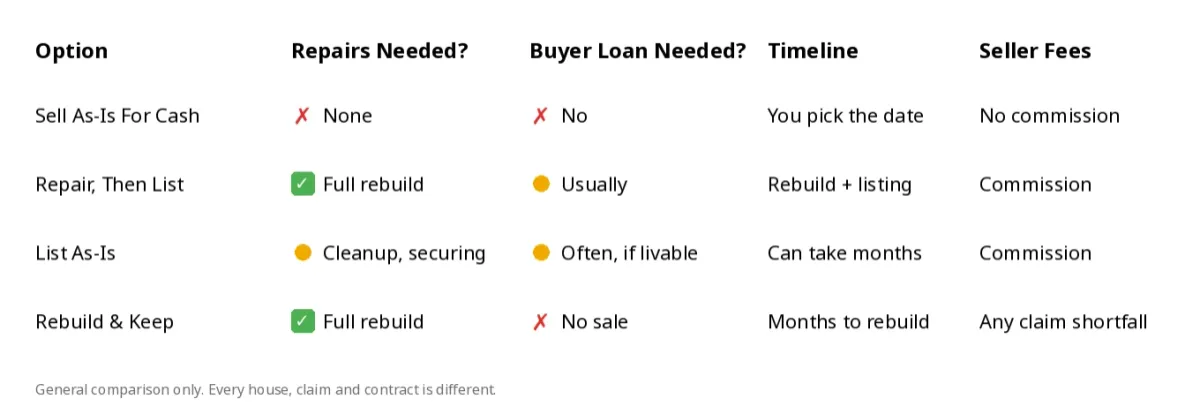
Options After a House Fire
Some owners rebuild and move back in. Others decide the repairs, the wait and the stress are not worth it. Before you decide, it helps to know the options you may have.
1. Start With Your Insurance Claim
Report the fire to your homeowners insurance company right away and ask for a full copy of your policy. The policy terms and the adjuster's estimate decide what is paid for the house, your belongings and temporary housing.
Ask your insurer about:
- Dwelling coverage limits and your deductible
- Actual cash value vs. replacement cost
- Additional living expenses while you are displaced
- Deadlines for proof of loss and finishing repairs
2. Repair the House With the Claim Money
Some owners choose to:
- Hire a licensed New Mexico contractor
- Pull building permits from the city or county
- Have smoke, soot and water damage remediated
- Replace roofing, wiring, drywall and insulation
Rebuilding can bring the house back to full value, but it often takes many months, and the claim may not cover every cost, especially if the policy pays actual cash value or code upgrades are required.
3. List the House, As-Is or After Repairs
Some owners sell after the fire because of life changes like:
- Deciding not to move back in
- Divorce
- A job move or relocation
Settling an estate? Read about selling an inherited house in Albuquerque.
4. Legal, Insurance & Claim Help
If a claim is denied, delayed or seems low, a New Mexico attorney or a licensed public adjuster can review it, and the Office of Superintendent of Insurance takes consumer complaints about insurers. This page is general information, not legal or insurance advice.
Helpful Resources:
How Selling a Fire-Damaged House Works
A fire-damaged house can be sold like any other house. The difference is that buyers want to know what burned, what the insurance claim covers, and whether the city or county has posted the property.
Typical steps:
- Confirm ownership and get your mortgage payoff
- Gather the fire report, claim number and adjuster estimate
- Agree on price, closing date and how the claim is handled
- Open title with a title company and review the title commitment
- Clear any city liens or open code cases it shows
- Sign the deed; the mortgage and liens are paid from your proceeds at closing
Repair work in Albuquerque usually needs City building permits:
City of Albuquerque: Building Permits
Contractors in New Mexico are licensed by the Construction Industries Division:
NM Construction Industries Division (check a contractor license)
Learn how homeowners insurance claims work in New Mexico:
NM Office of Superintendent of Insurance: Homeowners Insurance
How Long Does It Take To Sell a Fire-Damaged House?
Every fire is different. A house with damage in one room can sell much like any other house, while a house that is not livable usually draws mostly cash buyers, because many lenders will not finance it.
Some sales move faster when:
- The fire report and claim paperwork are in hand
- The house has been secured and cleaned out
- There are no open city code cases or liens
- No probate or title issues exist
Sales can take longer if there are:
- Major structural or roof damage
- A disputed or still-open insurance claim
- An unsafe-structure or condemnation order
- Several owners or heirs who must agree to sell
- City board-up or cleanup liens on the property
- Smoke odor or water damage through the house
- Utilities that were shut off after the fire
Condemned, Boarded-Up or Unsafe Structure Notices
After a serious fire, the City of Albuquerque may find the house substandard or unsafe and issue a notice and order to repair, vacate, secure (board up) or demolish it. Bernalillo County (outside city limits) and Rio Rancho have their own code enforcement offices. If an owner does not act in the time given, the city can have the work done and file a lien on the property for the cost. If the city has already declared the house unsafe, see our guide to selling a condemned or red-tagged house.
What owners who get a notice often need to check:
- The deadline and the action the notice requires
- How and when they can appeal or ask for more time
- Whether a board-up or demolition lien was recorded
- What permits are needed for repairs or demolition
Helpful local resources:
City of Albuquerque Code Enforcement
City of Albuquerque: Code Enforcement FAQs (liens and notices)
Bernalillo County Planning & Development Services (unincorporated areas)
Can You Sell a House After a Fire Without Fixing It?
In many cases, yes.
Some Albuquerque homeowners choose a direct cash sale in order to:
- Skip months of rebuilding and contractor bids
- Stop paying a mortgage on a house they cannot live in
- Avoid managing cleanup and repairs from a rental
- Sell before city board-up or cleanup costs grow
- Move on after a stressful event
Selling may still be possible even if:
- The house is not livable or has no utilities
- The insurance claim is still open or in dispute
- The roof or framing is badly damaged
- The city has posted or condemned the house
- The owner passed away and probate is open
- Smoke and water damage spread through the house
Talk with your adjuster before you sign a sale contract, because selling can affect how the rest of your claim is paid.
Your Mortgage, Insurance Payout & Liens After a Fire
A fire does not stop the mortgage. The monthly payment, property taxes and any liens are still owed while the house sits damaged.
If the fire has put you behind on your mortgage, here is how selling before foreclosure works.
Common issues include:
- Claim checks made out to you and your lender
- Lenders holding claim money and paying it out in stages
- Missed payments while you pay for temporary housing
- City board-up, cleanup or demolition liens
- Contractor or mechanic liens for unpaid work
If you have a mortgage, the dwelling part of the claim check is usually payable to both you and your lender, and many lenders release it in stages as repairs are done. Call your servicer early to ask about their process and any hardship options. If you sell, the mortgage and liens are typically paid from the sale proceeds at closing. How any remaining claim money is handled depends on your policy, your lender and the sale contract, so review it with your adjuster or an attorney first.
Helpful resource:
NM Office of Superintendent of Insurance: Homeowners Insurance
Smoke, Water & Structural Damage
Fire damage is often more than what burned. Buyers, inspectors and lenders usually look at:
- Smoke and soot inside walls, ducts and the attic
- Water damage from firefighting, and mold risk
- Roof, rafters and framing strength
- Burned or melted wiring and the electrical panel
- Damaged gas lines, water heater or HVAC
- Broken windows and doors left open to weather
- Many lenders will not finance a house that is not livable, which can leave you with mostly cash buyers.
Common problems after a fire include:
- Lingering smoke odor that keeps coming back
- Debris, ash and ruined belongings left inside
- Break-ins, squatters or trespassing at a vacant house
- Utilities shut off by PNM or the water utility
- Wet drywall and flooring that were never dried out
- Repair bids higher than the insurance estimate
Water from firefighting can lead to mold after water damage if the house sits closed up.
Repair, List or Sell As-Is for Cash?
Repairing and then listing on the MLS can bring the highest price, but it usually means you:
- Manage contractors, permits and inspections
- Cover any gap between the claim and the real repair cost
- Keep paying the mortgage, taxes and insurance during the rebuild
- Pay a listing commission when it sells
- Wait for a buyer and their lender after the work is done
Listing the house as-is is another path, though buyers who need a loan may not qualify on a house that is not livable. A direct cash sale trades some of the top price for speed and certainty: no repairs, no cleanup, no waiting on a buyer's loan, and a closing date you choose.
Ethan is also a licensed New Mexico real estate broker, so he can walk you through both paths and help you decide which one fits your situation.
Want the short version? See how we buy houses in Albuquerque as-is.
Albuquerque & Rio Rancho Resources After a Fire
Local fire and code enforcement offices homeowners may contact:
City of Albuquerque: Fire Rescue · Code Enforcement
Bernalillo County: Fire & Rescue · Planning & Code Enforcement
Rio Rancho: Fire and Rescue · Code Enforcement
Important Reminder
Every fire and every house is different.
How much burned, smoke and water damage, your policy and claim, your mortgage, city notices and liens can all affect your price, timeline and options.
The earlier homeowners review their situation, the more options they may have available.
FAQ
Can I sell my house after a fire without repairing it?
Yes. Fire-damaged houses can be sold as-is. Many buyers who need a loan cannot buy a house that is not livable, so these sales are often to cash buyers. The price reflects the damage, and you skip repairs, cleanup and contractor bids.
Do I still have to pay my mortgage after a house fire?
Yes. The loan is still owed after a fire. Insurance money for the dwelling is usually paid to you and your lender together. Call your servicer early about how they release claim funds and whether hardship options are available. If you sell, the mortgage is paid off from your proceeds at closing.
What happens to my insurance claim if I sell the house?
It depends on your policy, your lender and the sale contract. Some owners keep the claim money and sell the house as-is; in other sales the claim is part of the deal. Talk with your adjuster, and an attorney if needed, before you sign, so you know how the rest of your claim will be paid.
The city posted my house as unsafe. Can I still sell it?
Usually, yes. An unsafe or substandard-building notice stays with the property, and the buyer takes on the required repairs or demolition. Any city liens for board-up or cleanup are typically paid from your proceeds at closing. Watch the deadlines on the notice and contact the office that issued it.
Should I clean up or board up the house before selling?
Secure the house so it is safe and protected from weather and break-ins, and follow any city notice. You usually do not need to clean out or remove debris before a cash sale; a buyer purchasing as-is can handle that after closing. Check with your insurer first, since some policies cover board-up and debris removal.
How does your process work for a fire-damaged house?
Call (505) 300-2234 or send us the address. Ethan meets you in person at the house, walks through it with you, looks at the damage and any city notices, and goes over your numbers and options. Bring the claim details if you have them. If a cash sale fits, you choose the closing date.
Is it safe to go back into the house after a fire?
Not until the fire department says it is. The American Red Cross advises staying out of a fire-damaged home until local fire officials say it is safe to go back in, and not crossing tape or ignoring posted safety signs. Before you walk the house with an adjuster, a contractor or a buyer, make sure it has been cleared.
Do I need a permit to repair fire damage in Albuquerque?
Usually, yes, for structural, electrical, plumbing or mechanical work. Inside city limits, the City of Albuquerque's Building Safety Division issues building permits and inspects the work; Rio Rancho and Bernalillo County handle permits in their own areas. Use a contractor licensed through the New Mexico Construction Industries Division. If you sell as-is, the buyer takes on the repairs and permits.
Will my property taxes go down after a fire?
Not right away. New Mexico values property as of January 1 each year, so damage that happens later in the year is generally not reflected until the next January 1 valuation. Contact your county assessor, such as the Bernalillo County Assessor, about reporting the damage. When you sell, property taxes are typically prorated and settled at closing.
Do I have to tell a buyer about the fire?
Yes, be upfront. Standard New Mexico purchase contracts ask sellers to disclose known material facts and defects, and fire, smoke and water damage and any repairs are things a buyer needs to know. Hiding a known problem can lead to legal claims later. When you sell to us as-is, we see the damage in person, so nothing is hidden.
Can I sell a fire-damaged house that is in probate?
Usually, yes. The personal representative appointed in probate signs for the estate. In New Mexico, a personal representative generally can sell estate real estate without a separate court order unless the will or the court limits that power. A probate attorney or title company can confirm what your estate needs before closing.
What if the house had no insurance or the claim was denied?
You can still sell it. Without a payout, many owners cannot pay for repairs, and buyers who need a loan usually cannot finance a house that is not livable, so a cash sale as-is is a common path. If you believe your claim was handled unfairly, the New Mexico Office of Superintendent of Insurance accepts consumer complaints.
How do you work out an offer on a fire-damaged house?
We start with what the house would likely sell for after full repairs, then subtract the cost of the work it needs, such as debris removal, smoke and water cleanup, structural, roof and electrical repairs and permits, plus holding and selling costs. Ethan goes over those numbers with you in person, and we typically cover standard closing costs. Call (505) 300-2234 to set up a visit.
Ready To Explore Selling Your Fire-Damaged House?
If you're facing months of repairs, a claim that won't cover the work, a mortgage on a house you can't live in, or a notice from the city, understanding your options early can make a big difference.
Some homeowners choose to:
- sell without rebuilding
- pay off the mortgage and liens at closing
- skip cleanup, debris removal and contractor bids
- avoid more city board-up or cleanup costs
- avoid waiting on a buyer's loan
- sell as-is for cash on their own timeline
Every situation is different, especially with fire damage involving insurance claims, mortgages, city notices, liens or heirs.