
Selling a Condemned or Red-Tagged House in Albuquerque: What To Know
A bright placard on the front door that says "Do Not Enter, Substandard Building, Unsafe to Occupy" changes everything about a house. Maybe the roof or floors are failing, the house sat empty and was broken into, the city ordered it vacated or boarded, or a demolition hearing notice arrived in the mail, and now there are deadlines, costs and rules about who can even go inside.
Whether the house is in Albuquerque, elsewhere in Bernalillo County, or in Rio Rancho and Sandoval County, questions like what the order actually requires, how long you have, whether you can appeal, what happens if the city does the work and bills you, and whether you can still sell the house are worth answering early. You usually have more than one path: repair to code, demolish, appeal, or sell the house as-is. This guide explains how the process works so you can make a calm, informed decision.
This guide explains:
✅What a condemned or red-tagged notice means
✅Substandard building orders and deadlines
✅Vacate, board-up and demolition orders
✅Housing Code hearings and appeals
✅City abatement costs and liens
✅Selling a condemned house as-is
✅How our in-person process works
House Condemned or Posted Unsafe? Let's Look at Your Options.
Whether you have a substandard building notice and order, a posted vacate order, a demolition hearing notice, or a bill for boarding up a vacant house, we'll walk through your options for the property at your pace and help you understand your next steps. There is no pressure to decide anything on the first call.
Options When the City Says Your House Is Unsafe
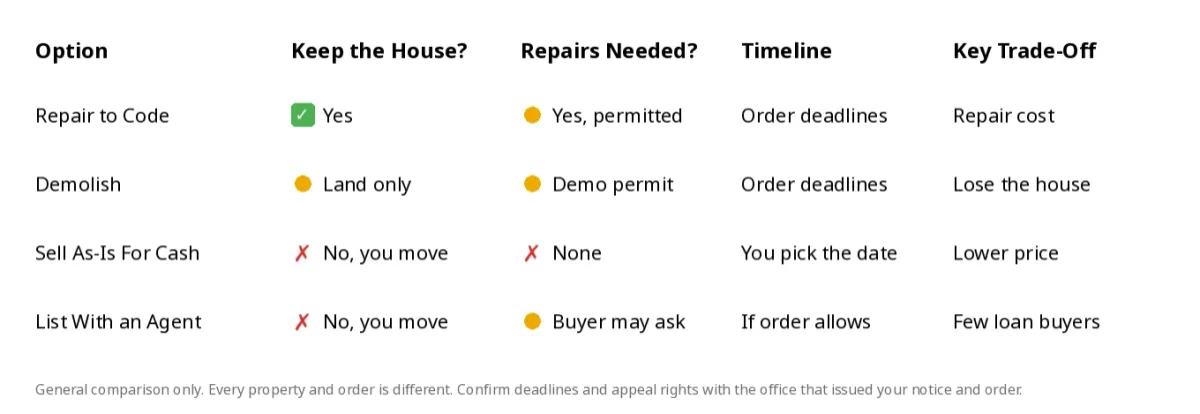
Some owners repair the house to current codes and get the order lifted. Others demolish the building and keep or sell the land, appeal an order they disagree with, or sell the house as-is for cash and let the buyer deal with the order. The right path depends on the condition of the house, the deadlines in your order, your budget and your goals.
1. Read the Order and Confirm What It Requires
Start with the paperwork. A City of Albuquerque substandard building notice and order describes the conditions found, the action required (repair, vacate, secure, abate or demolish) and your appeal rights. If your notice is only for smaller items like weeds, junk or a patio built without a permit, our guide to selling a house with code violations may fit your situation better.
Papers owners often gather:
- The notice and order, plus any posted placard
- The case number and the inspector or officer named on it
- Any hearing notice or decision
- Bills or lien notices for city boarding or cleanup work
2. Talk to the Office That Issued the Order
Some owners first try to:
- Ask exactly what must be done to close the case
- Ask whether permits are needed before work starts
- Request more time in writing if repairs are under way
- File an appeal before the deadline if they disagree
These steps can let you keep the house, but repairs to current Building and Housing Codes usually need licensed contractors, permits and inspections, and the deadlines in the order keep running while you decide.
3. Repair, Demolish or Sell As-Is
Owners often weigh things like:
- What the repairs would cost compared with what the house is worth
- Whether they have the cash and time to finish permitted work
- A house that needs more work than they can pay for
- Whether the land is worth more without the building
4. Legal Help for Hearings & Appeals
Appeal and hearing deadlines are short. If you want to challenge an order, need more time, or the house is part of an estate, a New Mexico attorney can explain your rights. This page is general information, not legal advice. Confirm every deadline with the office that issued your order.
Helpful Resources:
How a Substandard Building Case Works in Albuquerque
In Albuquerque, the Planning Department's Code Enforcement Division enforces the Uniform Housing Code. Under the code, a building found substandard is declared a nuisance that must be fixed by repair, rehabilitation, demolition, removal or securing its openings (ROA 1994, 14-3-5-12). The city serves a notice and order on the owner that takes effect eight days from the date of the notice. If repairs are ordered, permits must be pulled and work started within no more than 30 days of the effective date. If the building is immediately dangerous, the city posts a Notice and Order to Vacate on each exit, and it is a misdemeanor to occupy the building or remove the notice (ROA 1994, 14-3-5-3). Entry is still allowed to secure, repair or demolish the building under permit.
Typical steps:
- An inspection finds the building substandard
- The owner is served a notice and order
- The order takes effect eight days after the notice
- Work, vacating, securing or abatement must start by the dates set
- A written appeal can be filed with the City Clerk
- Unsafe structures can move to an administrative demolition hearing
City of Albuquerque Code Enforcement (Uniform Housing Code):
City of Albuquerque Code Enforcement
Check for open cases and city lien payoffs:
City of Albuquerque: Code Enforcement FAQs
Permits for repair or demolition work:
Vacate, Demolition Orders & Appeal Deadlines
Under the Housing Code, an owner can appeal a notice and order in writing to the City Clerk within 15 days, and a timely appeal pauses enforcement while it is heard by the Independent Hearing Officer (ROA 1994, 14-3-5-4). A demolition order requires the building to be vacated within no more than 30 days of the effective date and demolition permits within 60 days. For buildings that are structurally unsafe or unfit for human habitation, the city's Administrative Demolition Ordinance (ROA 1994, 14-23) sets a hearing 10 to 30 days after notice. If the hearing officer agrees with the city, the owner must secure the property within 48 hours and then repair it to code or demolish it within 90 days unless the city agrees to an extension. The owner can object in writing to the City Clerk within 10 days and ask for a City Council hearing.
The timeline may feel shorter when:
- The house is already posted as unsafe to occupy
- Notices went to an old mailing address
- The owner passed away and no one is handling the house
- An appeal deadline has already passed
Questions to ask the office that issued the order:
- What exactly must be done to close this case?
- What are the deadlines, and when did the order take effect?
- Is a hearing scheduled, and on what date?
- Can I get more time if work is under way?
- Has the city done any work or recorded any lien?
- Can I or a buyer go inside to look at the house?
- What happens to the order if the house is sold?
City Abatement Costs, Liens & Recorded Notices
If an owner does not act, the city can do the work itself. When Albuquerque secures a building, removes a nuisance or demolishes a building, the cost is a lien against the property and a personal obligation of the owner (ROA 1994, 14-3-5-7). If a final order is not obeyed, the owner can face a $500 civil penalty, and a hearing officer can order a fee of up to $500 plus $100 for each month of noncompliance, which can become a lien (14-3-5-6). If an order is not complied with and no appeal was filed, the city records a certificate with the County Clerk stating the building is substandard (14-3-5-3). A demolition notice is also recorded, runs with the property, and later buyers take the property subject to it (14-23-4). Under state law, other New Mexico cities can order ruined, damaged and dilapidated buildings removed and record a lien for the cost (NMSA 3-18-5).
What owners often need to check:
- Any city liens for boarding, cleanup or demolition
- Any recorded substandard or demolition notice
- Penalties or monthly fees ordered after a hearing
- That the county assessor has your current mailing address, since notices go to the owner on the county's records
Helpful local resources:
Can You Sell a Condemned House?
In many cases, yes.
Some New Mexico owners choose a direct cash sale in order to:
- Skip repairs, permits and inspections they cannot afford
- Avoid paying for a demolition they do not want
- Stop new city boarding, cleanup and penalty costs
- Avoid showings and buyer loan approval
- Close before the next deadline in the order
Selling may still be possible even if:
- The house is posted unsafe to occupy
- A demolition hearing is scheduled or an order was issued
- The house was inherited from a parent
- The house has fire damage or structural problems
- City liens or a substandard notice are recorded
- The house has been vacant, boarded or broken into
The city's own Problematic Properties list shows several houses being rehabilitated by a new owner. Any buyer takes the house subject to the order, so it has to be disclosed in writing and the title company handles any recorded liens at closing. We meet sellers in person at the house, look at the order with you and plan for the repair or demolition work on our side after closing.
Inherited & Vacant Houses Facing a Condemnation Case
Many condemned houses are inherited or have sat empty for years. Notices keep going to the person on the county records, so a family may not learn about an order until a placard is posted or a hearing date is close. Albuquerque also requires a vacant building maintenance license for vacant buildings (ROA 1994, 14-3-5-14).
Common issues include:
- Notices mailed to an owner who passed away
- Not knowing who has the authority to sell or sign
- Break-ins, squatters or trespassing
- Boarding, utility and insurance costs nobody budgeted for
- Family members with different plans for the house
The person handling the estate can usually respond to the order or sell the house. A probate or estate attorney can tell you who has the authority to sign, and it helps to let the office handling the case know who that is.
Helpful resource:
Questions To Ask Before You Decide
Before repairing, demolishing or selling, owners usually think about:
- What the house would sell for as-is, as a lot, and after repairs
- What repairs to current codes would really cost
- How much is owed in city liens, penalties and other debts
- Whether they can finish permitted work before the deadlines
- Whether tenants live there and must move under a vacate order
- Whether an appeal has a real chance of changing the order
- Whether the house is part of an estate
Common sources of stress include:
- A placard that keeps them out of their own house
- Hearing dates and appeal deadlines that are close
- City bills that keep adding to what is owed
- A distressed house that needs more repairs than they can afford
- Title problems or recorded liens they do not understand
- Not knowing what the house is worth as-is
What If a Demolition Hearing Is Already Set?
If you have a hearing notice or an order, owners usually:
- Call the office on the notice right away to confirm dates
- Gather photos, bids or permits that show a repair plan
- Attend the hearing or have an attorney attend
- If selling, give the title company the hearing date on day one
- Keep written proof of every filing and agreement
If tenants live in a house ordered vacated, the owner may have to pay their relocation costs when the conditions were in the owner's control (ROA 1994, 14-3-5-16). Repairing to code can keep the house in the family if there is time and money, and listing with an agent may work if the order allows enough time for a buyer, while a direct cash sale trades some of the top price for speed: no repairs, no showings and a closing date you choose.
Ethan is also a licensed New Mexico real estate broker, so he can walk you through the selling paths, while the city, the county or your attorney confirms your exact deadlines and appeal rights.
Albuquerque, Bernalillo County & Rio Rancho Resources
Offices and legal help owners may contact:
Albuquerque: Code Enforcement · ADAPT (abandoned and dilapidated properties) · 311
Bernalillo County: Property Nuisance Abatement Office · Planning & Development Services · Rio Rancho: Code Enforcement · Sandoval County: Planning & Zoning
Legal help: State Bar of New Mexico · New Mexico Legal Aid
Important Reminder
Every property and every order is different.
The conditions found, the type of order, your deadlines and appeal rights, any city liens, tenants, and who owns the house can all affect your price, timeline and options.
The earlier you read your order and confirm your deadlines with the office that issued it, the more options you may have available.
FAQ
What does it mean when a house is condemned or red-tagged in Albuquerque?
People usually mean the city has found the building substandard or unsafe under the Uniform Housing Code. If it is immediately dangerous, the city posts a Notice and Order to Vacate on each exit that reads "Do Not Enter, Substandard Building, Unsafe to Occupy." No one may live there, but entry is allowed to secure, repair or demolish the building under permit.
How long do I have to respond to a substandard building order?
A Housing Code notice and order takes effect eight days from the date of the notice, and you can appeal in writing to the City Clerk within 15 days. Repair orders require permits and work to start within no more than 30 days of the effective date. Your order lists your exact deadlines, so read it closely and confirm them with Code Enforcement.
Can the city demolish my house?
Yes, after notice and a hearing. Under Albuquerque's Administrative Demolition Ordinance, a hearing is held 10 to 30 days after notice. If the hearing officer finds the house unfit for human habitation, the owner must secure it within 48 hours and repair or demolish it within 90 days unless the city agrees to more time. If the owner does not, the city can demolish it and file the cost as a lien.
Can I sell a house that is condemned or has a demolition order?
Usually, yes. The order stays with the property, so it must be disclosed and the buyer takes the house subject to it. Recorded city liens show up on the title report and are typically paid from your proceeds at closing. A cash buyer can take on the repairs or demolition after closing.
What happens to city boarding or demolition costs?
When the city secures, cleans up or demolishes a building, the cost becomes a lien against the property and a personal obligation of the owner. The Code Enforcement Division can provide a lien payoff, and the title company confirms what is owed before closing.
How does your process work for a condemned house?
Call (505) 300-2234 or send us the address. We meet sellers in person at their homes, so Ethan meets you at the property, reviews the order and the house with you, and goes over your numbers and options. You don't need to repair, permit or demolish anything first. If a cash sale fits, you choose the closing date.
Ready To Talk About the House?
If your house has been posted unsafe, you have a substandard building order, or a demolition hearing is coming up, understanding your options early can give you more choices and more control.
Some homeowners choose to:
- sell without making repairs
- skip permits, contractors and reinspections
- avoid paying for a demolition
- stop new city costs and penalties
- avoid showings and waiting on a buyer's loan
- sell as-is for cash on their own timeline
Every situation is different, so confirm your deadlines and appeal rights with the office that issued your order before you decide.
Ready To Sell Your House Fast In Albuquerque?
Get a fair cash offer from a local Albuquerque home buyer.
No pressure. No obligation.
Follow Us


Other
We Help With
We Buy Houses In
This is not legal, financial, or tax advice. For specific answers tailored to your situation, we always recommend consulting your trusted professionals. Some members of NM Cash Offer LLC are licensed real estate brokers in the State of New Mexico. NM Cash Offer LLC does not represent any Sellers in this transaction unless a separate written listing agreement is executed. Click to see Broker Disclosure.
© Copyright 2026 NM Cash Offer LLC. All Rights Reserved.