
Selling a House With Mold in Albuquerque: What To Know
A musty smell that will not go away, dark spots spreading on a ceiling, or a home inspection report that says "suspected mold" can stop a sale in its tracks. Maybe a roof or swamp cooler leaked for months, a pipe burst under a sink, the house sat empty with the water on, or a buyer backed out after the inspection, and now you are wondering what it will cost and whether anyone will buy the house.
Whether the house is in Albuquerque, elsewhere in Bernalillo County, or in Rio Rancho and Sandoval County, questions like what is causing the moisture, what you have to tell a buyer, whether to clean it up first, how inspections and buyer loans react, and whether you can still sell the house as-is are worth answering early. You usually have more than one path: fix the water problem and remediate, sell as-is to a cash buyer, or list with an agent. This guide explains how each works so you can make a calm, informed decision.
This guide explains:
✅Common causes of mold in high desert homes
✅What New Mexico sellers usually disclose
✅Cleanup and remediation basics from the EPA
✅Why mold testing is often not needed
✅How inspections and buyer loans react
✅Inherited and rental houses with mold
✅Selling a house with mold as-is
Found Mold in the House? Let's Look at Your Options.
Whether you just found mold behind a cabinet, a buyer's inspector flagged it, or you inherited a house that has been closed up for years, we'll walk through your options for the property at your pace and help you understand your next steps. There is no pressure to decide anything on the first call.
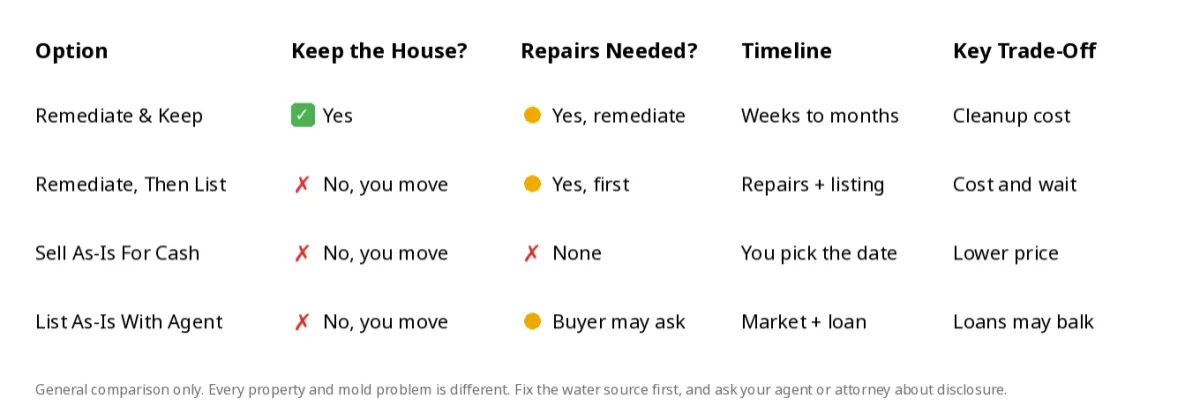
Options When a House Has Mold
Some owners fix the water problem, have the mold cleaned up and then sell. Others list the house as-is with an agent, or sell it as-is for cash and let the buyer handle the repairs after closing. The right path depends on how much of the house is affected, what caused it, your budget, your timeline and your goals.
1. Find and Stop the Water Source
Mold needs moisture. The EPA and the New Mexico Department of Health both say the key to mold control is moisture control, and that water-damaged areas and items should be dried within 24 to 48 hours to prevent mold growth (EPA mold guide). Cleaning mold without fixing the leak usually means it comes back.
Places owners often check first:
- Roof leaks and flat roof drains
- Swamp cooler pans, lines and roof jacks
- Leaks under sinks, toilets and water heaters
- Bathrooms without a working exhaust fan
2. Decide Who Does the Cleanup
The EPA suggests that:
- An area under about 10 square feet is often a do-it-yourself job
- Larger areas or heavy water damage call for its remediation guidance
- Soaked porous items like carpet or ceiling tiles may need to be thrown away
- Moldy surfaces should not simply be painted or caulked over
See the EPA page on mold cleanup in your home. Larger jobs often involve a remediation company plus repairs by a roofer, plumber or contractor, and repair work may need city permits.
3. Fix, List or Sell As-Is
Owners often weigh things like:
- What cleanup and repairs would cost compared with what the house is worth
- Whether they have the cash and time to manage contractors
- A house that needs more work than they can pay for
- How a buyer and their lender are likely to react
4. Legal Help for Disclosure & Rental Questions
What you must tell a buyer, and what a landlord owes a tenant, depend on your facts and your contract. A New Mexico real estate attorney or your agent can explain your duties. This page is general information, not legal or medical advice.
Helpful Resources:
What Causes Mold in High Desert Homes
Albuquerque is dry most of the year, but mold still grows wherever water collects. The CDC lists leaks in roofs, windows and pipes and past flooding as common sources, and mold can grow on drywall, wood, insulation, carpet and ceiling tiles. The EPA suggests keeping indoor humidity below 60 percent, ideally between 30 and 50 percent. The Department of Health also reminds New Mexicans to dry out quickly after monsoon storms and floods. New Mexico has no state law or agency that regulates mold levels, and there are no federal indoor air standards for mold, according to the Department of Health.
Common moisture sources we see in local homes:
- Flat or pitched roof leaks after monsoon storms
- Swamp (evaporative) cooler pans or lines that leak or overflow
- Slow plumbing leaks inside walls or under slabs
- Yard flooding or irrigation water against the foundation
- Poor ventilation in bathrooms, kitchens and crawl spaces
- A house closed up for months with a leak nobody noticed
EPA homeowner guide to mold and moisture:
EPA: A Brief Guide to Mold, Moisture and Your Home
Health information from the CDC:
New Mexico health guidance:
Mold Disclosure When Selling in New Mexico
Disclosure is where many sellers feel stuck. In New Mexico, real estate brokers must disclose in writing any adverse material facts they actually know about a property (16.61.19.8 NMAC). The New Mexico REALTORS property disclosure form many sellers fill out lists mold under hazardous, environmental and toxic issues, asks sellers about adverse material facts they actually know, and asks them to update the form if they learn something new before closing. Your exact duty depends on your contract and your facts, so ask your agent or a real estate attorney what to disclose. In general, telling buyers about known mold, leaks and past cleanup, with any reports and receipts, helps avoid disputes later.
Disclosure questions often come up when:
- Mold was cleaned up years ago
- A leak was fixed but stains remain
- The seller never lived in the house
- A past buyer’s inspection found mold
Papers that help when you disclose:
- Inspection or remediation reports
- Receipts for roof, plumbing or cooler repairs
- Photos of the problem areas
- Any lab results, if testing was done
- Notes on when the leak started and stopped
- Insurance letters about the water damage
- Any city notice about the property
Inspections, Mold Testing & Buyer Loans
Buyers usually find mold during the home inspection. Testing is often less useful than people expect: the EPA says that in most cases, if visible mold growth is present, sampling is unnecessary, and the CDC does not recommend mold testing because there are no set standards for an acceptable amount of mold in a home. The City of Albuquerque Environmental Health Department gives the same advice: investigate, don't test (City of Albuquerque: Mold). Lenders and appraisers may also flag visible mold, active leaks or water damage, and some loans may require repairs before closing, which can delay or end a traditional sale.
What sellers often run into:
- A buyer asking for repairs or a lower price after inspection
- An appraisal that notes water damage or needed repairs
- A loan that cannot close until repairs are done
- Buyers walking away and the house going back on the market
Helpful local resources:
Can You Sell a House With Mold As-Is?
In many cases, yes.
Some New Mexico owners choose a direct cash sale in order to:
- Skip remediation and repair bills
- Avoid managing contractors in a vacant house
- Avoid inspection repair requests and buyer loan approval
- Avoid showings in a house that smells or is torn open
- Close on a date that works for them
Selling may still be possible even if:
- Mold is visible in several rooms
- Drywall or flooring has already been removed
- The house also has fire damage or water damage
- The house is full of belongings that hide the problem
- The city cited the property for code violations
- A past buyer backed out after the inspection
If the city has posted the house as unsafe to occupy, our guide to selling a condemned house covers that process. A house with mold can still be sold as long as known problems are disclosed in writing. We meet sellers in person at the house, look at the problem areas with you and plan for the cleanup and repairs on our side after closing.
Inherited & Rental Houses With Mold
Inherited houses often sit closed up while the family sorts things out, and a small leak can turn into a big mold problem before anyone notices. Rentals have their own rules. Under the New Mexico Uniform Owner-Resident Relations Act, a landlord must substantially comply with housing codes that materially affect health and safety, keep the premises safe, and keep plumbing, heating, ventilating and air conditioning in good working order (NMSA 47-8-20). The City of Albuquerque tells renters to give written notice to the owner and allow at least 3 days for a response, and to call 311 about an ongoing uncorrected water leak.
Common issues include:
- A house sitting empty with no one checking for leaks
- Not knowing who has the authority to sell or sign
- Tenants who have reported mold or leaks
- Repair bills nobody budgeted for
- Family members with different plans for the house
The person handling the estate can usually sell the house, and a probate or estate attorney can tell you who has the authority to sign. If tenants live there, our rental property selling guide covers selling with tenants in place.
Helpful resource:
Questions To Ask Before You Decide
Before cleaning up, listing or selling, owners usually think about:
- What the house would sell for as-is and after repairs
- What remediation and repairs would really cost
- Whether the water source has been found and fixed
- Whether drywall, flooring or cabinets have to come out
- Whether anyone living there is sensitive to mold
- Whether tenants live there and have reported problems
- Whether the house is part of an estate
Common sources of stress include:
- Not knowing how far the mold has spread inside walls
- Remediation bids that are far apart
- Buyers backing out after an inspection
- A distressed house that needs more repairs than they can afford
- Worry about what has to be disclosed
- Not knowing what the house is worth as-is
Remediate First or Sell As-Is?
If you are deciding, owners usually:
- Stop the leak or water source first, whatever they choose
- Get one or two written remediation and repair bids
- Keep photos, reports and receipts for disclosure
- Keep anyone sensitive to mold away from the affected areas
- Ask an agent what the house would sell for each way
Remediating and repairing can bring a higher price if you have the time and money and the job stays the size you expect. Listing with an agent may work if the damage is limited and buyers' lenders will accept it, while a direct cash sale trades some of the top price for speed: no remediation, no repairs, no showings and a closing date you choose.
Ethan is also a licensed New Mexico real estate broker, so he can walk you through the selling paths, while your attorney answers disclosure and legal questions and a health care provider answers health questions.
Albuquerque, Rio Rancho & New Mexico Mold Resources
Offices and legal help owners may contact:
Albuquerque: Environmental Health: Mold · Code Enforcement · 311 · Rio Rancho: Code Enforcement
New Mexico & federal: Department of Health: Mold · EPA: Mold Cleanup · EPA: Remediation Guide · CDC: Mold
Legal help: State Bar of New Mexico · New Mexico Legal Aid
Important Reminder
Every property and every mold problem is different.
What caused the moisture, how much of the house is affected, what has been disclosed before, tenants, and who owns the house can all affect your price, timeline and options.
The earlier you find and stop the water source and get good information, the more options you may have available.
FAQ
Can I sell a house with mold in Albuquerque?
Yes. Houses with mold are sold in Albuquerque and Rio Rancho, either after cleanup or as-is. Known mold and water damage should be disclosed in writing, and the price and type of buyer usually depend on how much of the house is affected and whether the water source has been fixed.
Do I have to disclose mold when selling in New Mexico?
The New Mexico REALTORS property disclosure form lists mold under hazardous, environmental and toxic issues and asks about adverse material facts the seller actually knows, and brokers must disclose adverse material facts they know about. Your exact duty depends on your contract and situation, so ask your agent or a real estate attorney.
Should I test for mold before selling?
Often it is not needed. The EPA says that if mold is visible, sampling is usually unnecessary, and the CDC does not recommend mold testing because there are no set standards for acceptable mold levels. Finding and fixing the moisture source matters more. A buyer may still choose to do their own inspection.
Should I clean up the mold before I sell?
It depends on the size of the problem and your budget. The EPA says an area under about 10 square feet is often a do-it-yourself job, while larger areas or heavy water damage call for its remediation guidance. Stopping the leak is worth doing either way. If you sell to a cash buyer as-is, you do not have to remediate first.
Will a buyer's lender approve a house with mold?
Sometimes not right away. Appraisers and lenders may flag visible mold, active leaks or water damage, and some loans may require repairs before closing. That is one reason some sellers choose a cash buyer, who does not need loan approval.
How does your process work for a house with mold?
Call (505) 300-2234 or send us the address. We meet sellers in person at their homes, so Ethan meets you at the property, walks through the problem areas with you, and goes over your numbers and options. You don't need to clean, test or repair anything first. If a cash sale fits, you choose the closing date.
Ready To Talk About the House?
If you found mold, a buyer's inspection flagged it, or you inherited a house with water damage, understanding your options early can give you more choices and more control.
Some homeowners choose to:
- sell without remediation or repairs
- skip contractors, bids and reinspections
- avoid inspection repair requests
- avoid waiting on a buyer's loan approval
- avoid showings in a damaged house
- sell as-is for cash on their own timeline
Every situation is different, so talk with your agent or attorney about disclosure before you decide.
Ready To Sell Your House Fast In Albuquerque?
Get a fair cash offer from a local Albuquerque home buyer.
No pressure. No obligation.
Follow Us


Other
We Help With
We Buy Houses In
This is not legal, financial, or tax advice. For specific answers tailored to your situation, we always recommend consulting your trusted professionals. Some members of NM Cash Offer LLC are licensed real estate brokers in the State of New Mexico. NM Cash Offer LLC does not represent any Sellers in this transaction unless a separate written listing agreement is executed. Click to see Broker Disclosure.
© Copyright 2026 NM Cash Offer LLC. All Rights Reserved.