
Selling a House With Foundation Problems in Albuquerque
A stair-step crack running through the stucco, a door that suddenly will not latch, a floor that slopes toward one corner, a gap opening between a wall and the ceiling, or an inspection report that says "evidence of settlement, recommend evaluation by a structural engineer" can stop a sale in its tracks. Maybe the cracks have been growing for years, a leaking water line soaked the ground next to the house, a buyer backed out after the inspection, or you inherited a house that has been shifting for a long time, and now you are wondering whether you have to fix the foundation before anyone will buy it.
Whether the house is in Albuquerque, elsewhere in Bernalillo County, or in Rio Rancho and Sandoval County, questions like what is causing the movement, whether you need an engineer, what permits apply, what you have to tell a buyer, how buyer loans and insurance react, and whether you can still sell the house as-is are worth answering early. You usually have more than one path: repair the foundation, sell as-is to a cash buyer, or list with an agent. This guide explains how each works so you can make a calm, informed decision.
This guide explains:
✅Common signs of foundation movement
✅Why local soils can move under a house
✅Getting a structural engineer report
✅Permits and licensed New Mexico contractors
✅What New Mexico sellers usually disclose
✅How FHA and VA loans view structural issues
✅Selling a house with foundation problems as-is
Cracks or Settling? Let's Look at Your Options.
Whether the cracks just showed up, a buyer's inspector flagged the foundation, or you inherited a house that has been settling for years, we'll walk through your options for the property at your pace and help you understand your next steps. There is no pressure to decide anything on the first call.
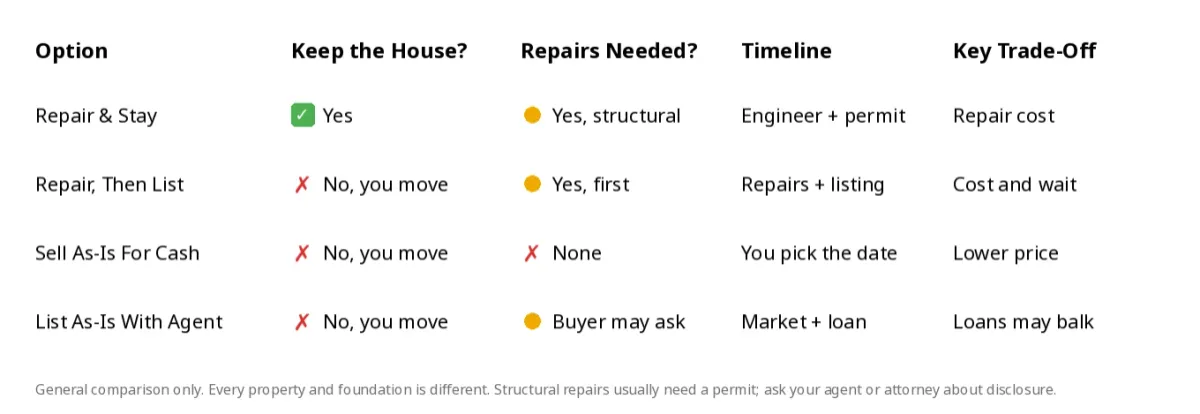
Options When a House Has Foundation Problems
Some owners repair the foundation and then sell. Others list the house as-is with an agent, or sell it as-is for cash and let the buyer handle the structural work after closing. The right path depends on what is causing the movement, how far it has gone, your budget, your timeline and your goals.
1. Find Out What Is Really Going On
Small hairline cracks are common as houses age, while cracks that keep growing, doors that stop closing, sloping floors or cracks that are wider at one end can point to ongoing movement. A licensed structural engineer can look at the house and put the findings and repair recommendations in writing. Water is often part of the story, so look for plumbing and drainage leaks too, and see our guide if a leak has also led to mold.
Places owners often check first:
- Stucco and block walls for stair-step cracks
- Doors and windows that stick or will not latch
- Slab, tile and garage floors for cracks or slope
- Downspouts, canales and sprinklers near the walls
2. Permits and Licensed Contractors
Local rules to know:
- New Mexico code requires a permit for most repairs
- Albuquerque permits are handled through ABQ-PLAN
- Rio Rancho asks owners to call before starting work
- In Albuquerque, rentals need a licensed contractor to pull the permit
New Mexico's residential code, as quoted in the state's residential building permit guide, says a building may not be altered or repaired without a permit, apart from a short list of minor work. The Construction Industries Division licenses residential contractors under the GB-2 classification, which covers altering and repairing homes (14.6.6.9 NMAC), and you can check a contractor's license with the New Mexico RLD license lookup. See the City of Albuquerque page on building permits and the Rio Rancho Building Division.
3. Fix, List or Sell As-Is
Owners often weigh things like:
- What the engineer's repair plan would cost compared with what the house is worth
- Whether they have the cash and time to manage the repair
- A house that needs more work than they can pay for
- How a buyer and their lender are likely to react
4. Legal Help for Disclosure & Insurance Questions
What you must tell a buyer, and what your homeowners policy covers, depend on your facts, your contract and your policy. A New Mexico real estate attorney or your agent can explain disclosure duties, and your insurance agent can explain your coverage. This page is general information, not legal or insurance advice.
Helpful Resources:
Why Albuquerque Soils Can Move Under a House
Much of the Albuquerque area sits on dry desert soils, and some of them do not stay put once they get wet. The New Mexico Bureau of Geology explains that collapsible soils compact and settle after water soaks into them, and that leaking water and sewer lines, septic systems, roof runoff and heavy watering near a house can add that water. Its Albuquerque-area mapping shows high to extreme susceptibility in much of the area north of I-40 (especially near I-25 north of Comanche Road), along the eastern Rio Grande floodplain around Edith Boulevard, and in the bottom of Tijeras Arroyo. These maps are regional, so only testing at the site can confirm soil conditions, and clay soils that shrink and swell can also move slabs and footings. The Bureau suggests keeping as much water as possible away from foundations, for example with xeriscaping near the house and downspouts that carry runoff away.
Common warning signs in local homes:
- Stair-step cracks in stucco or block walls
- Doors and windows that stick or will not latch
- Cracks in slab floors, tile or garage floors
- Floors that slope or feel uneven
- Gaps opening between walls, ceilings or trim
- Cracks that keep getting longer or wider
How collapsible soils damage homes:
NM Bureau of Geology: Collapsible Soils
Albuquerque-area soil susceptibility mapping:
NM Bureau of Geology: Albuquerque Basin Report (PDF)
Other geologic hazards in New Mexico:
Foundation Disclosure When Selling in New Mexico
Disclosure is where many sellers feel stuck. In New Mexico, real estate brokers must disclose in writing any adverse material facts they actually know about a property (16.61.19.8 NMAC). The New Mexico REALTORS property disclosure form many sellers fill out has a building, structural and foundation section that asks sellers to describe known issues such as doors and windows that do not close, unlevel floors, cracks in walls, ceilings, stucco or concrete slabs, sagging beams and problems with foundation supports. Your exact duty depends on your contract and your facts, so ask your agent or a real estate attorney what to disclose. In general, telling buyers about known cracks, past repairs and any engineer reports helps avoid disputes later.
Disclosure questions often come up when:
- Cracks were patched and painted over
- A past repair came with a report or warranty
- The seller never lived in the house
- A past buyer’s inspection flagged the foundation
Papers that help when you disclose:
- Structural engineer or soils reports
- Repair contracts, receipts and warranties
- Permits for past foundation work, if you have them
- Photos and dates showing how cracks changed
- Records of plumbing or water line leaks
- Insurance letters about the damage
- Any city notice about the property
Engineer Reports, Buyer Loans & Insurance
Buyers usually learn about structural problems during the home inspection, and the inspector may recommend an evaluation by a structural engineer. You can check an engineer's New Mexico license with the state engineering licensing board. The buyer's lender looks at the house too. HUD's FHA guidance lists evidence of possible structural failure, such as settlement or bulging foundation walls, unsupported floor joists, or cracked masonry walls or foundation, as conditions that call for inspection by a qualified professional, and a house with evidence of continuing settlement may not be eligible until the problem is fixed (HUD Handbook 4000.1). VA loans have their own minimum property requirements, and a VA appraisal may call for repairs before closing (VA property requirements checklist). Rules can change and lenders may add their own, but structural issues can delay or end a financed sale. Insurance is a separate question: many homeowners policies exclude settling, cracking and wear and tear, while damage from a sudden covered event, such as a burst pipe, may be treated differently. Read your policy's exclusions and ask your agent what is excluded (NM OSI: Homeowners Insurance).
What sellers often run into:
- A buyer asking for repairs or a lower price after inspection
- An appraisal that calls for a structural inspection
- A loan that cannot close until repairs are done
- Buyers walking away and the house going back on the market
Helpful local resources:
Can You Sell a House With Foundation Problems As-Is?
In many cases, yes.
Some New Mexico owners choose a direct cash sale in order to:
- Skip paying for foundation and structural repairs
- Avoid managing engineers, contractors and permits
- Avoid inspection repair requests and buyer loan approval
- Avoid showings where buyers focus on the cracks
- Close on a date that works for them
Selling may still be possible even if:
- The cracks are still growing
- Doors, windows or floors are out of level
- The house also has fire damage
- The roof is worn out and needs replacing
- The city cited the property for code violations
- A past buyer backed out after the inspection
If the city has posted the house as unsafe to occupy, our guide to selling a condemned house covers that process. A house with foundation problems can still be sold as long as known problems are disclosed in writing. We meet sellers in person at the house, look at the cracks and any engineer report with you, and plan for the structural work on our side after closing.
Inherited, Vacant & Rental Houses With Structural Issues
Inherited and vacant houses often sit closed up while the family sorts things out, and a slow plumbing leak or a broken sprinkler line can soak the soil next to the foundation for months before anyone notices. Rentals have their own rules. Under the New Mexico Uniform Owner-Resident Relations Act, a landlord must substantially comply with minimum housing codes that materially affect health and safety, and make repairs needed to put and keep the premises in a safe condition (NMSA 47-8-20). In Albuquerque, the city also says a licensed contractor must pull the permit for work on homes leased or rented to others.
Common issues include:
- A house sitting empty with no one watching for leaks
- Not knowing who has the authority to sell or sign
- Tenants who have reported cracks or sticking doors
- Repair bills nobody budgeted for
- Family members with different plans for the house
The person handling the estate can usually sell the house, and a probate or estate attorney can tell you who has the authority to sign. If tenants live there, our rental property selling guide covers selling with tenants in place.
Helpful resource:
Questions To Ask Before You Decide
Before repairing, listing or selling, owners usually think about:
- What the house would sell for as-is and after repairs
- What the engineer's repair plan would really cost
- Whether the movement has stopped or is still going
- Whether a leak or drainage problem is feeding it
- Whether past repair work came with a transferable warranty
- Whether tenants live there and have reported problems
- Whether the house is part of an estate
Common sources of stress include:
- Repair bids that are far apart
- Not knowing how serious the cracks really are
- Buyers backing out after an inspection
- A distressed house that needs more repairs than they can afford
- Worry about what has to be disclosed
- Not knowing what the house is worth as-is
Repair the Foundation First or Sell As-Is?
If you are deciding, owners usually:
- Fix active plumbing leaks and drainage problems first
- Get a written report from a licensed structural engineer
- Get written bids that follow the engineer's plan
- Ask whether each bid includes permits and inspections
- Ask an agent what the house would sell for each way
Repairing the foundation can bring a higher price if you have the time and money and the job stays the size the engineer expects. Listing with an agent may work if the issues are minor and buyers' lenders will accept them, while a direct cash sale trades some of the top price for speed: no structural repairs, no showings and a closing date you choose.
Ethan is also a licensed New Mexico real estate broker, so he can walk you through the selling paths, while your attorney answers disclosure and legal questions and your engineer answers structural questions.
Albuquerque, Rio Rancho & New Mexico Foundation Resources
Offices and legal help owners may contact:
Albuquerque: Building Permits · ABQ-PLAN · Code Enforcement · 311 · Rio Rancho: Building Division · Get a Permit
New Mexico & federal: Collapsible Soils (NM Bureau of Geology) · Engineer License Search · RLD License Lookup · Contractor License Classes (14.6.6.9 NMAC) · HUD Handbook 4000.1
Legal help: State Bar of New Mexico · New Mexico Legal Aid
Important Reminder
Every property and every foundation is different.
What is causing the movement, whether it has stopped, what has been disclosed before, tenants, insurance coverage and who owns the house can all affect your price, timeline and options.
The earlier you stop leaks, steer water away from the house and get good information, the more options you may have available.
FAQ
Can I sell a house with foundation problems in Albuquerque?
Yes. Houses with cracks, settlement and other structural issues are sold in Albuquerque and Rio Rancho, either after repairs or as-is. Known problems should be disclosed in writing, and the price and type of buyer usually depend on how serious the movement is and whether it has stopped.
Do I have to disclose foundation cracks when selling in New Mexico?
The New Mexico REALTORS property disclosure form has a building, structural and foundation section that asks sellers to describe known issues such as unlevel floors, doors that do not close and cracks in walls, stucco or slabs, and brokers must disclose adverse material facts they know about. Your exact duty depends on your contract and situation, so ask your agent or a real estate attorney.
Do I need a structural engineer report before I sell?
Not always, but a written report can help. A licensed structural engineer can tell you whether cracks look cosmetic or point to ongoing movement and what repairs they would recommend, and buyers, lenders and contractors often rely on that report. You can check an engineer's license with the New Mexico engineering licensing board.
Will a buyer's FHA or VA loan close if the foundation is damaged?
Sometimes not right away. HUD's FHA guidance lists settlement, bulging foundation walls and cracked masonry or foundation as signs of possible structural failure that call for a professional inspection, and VA loans have their own minimum property requirements. Lenders may require repairs before closing. That is one reason some sellers choose a cash buyer, who does not need loan approval.
Does homeowners insurance cover foundation settling?
Often not. Many homeowners policies exclude settling, cracking and wear and tear, though damage from a sudden covered event, such as a burst pipe, may be treated differently. Coverage depends on your exact policy, so read its exclusions and ask your insurance agent.
How does your process work for a house with foundation problems?
Call (505) 300-2234 or send us the address. We meet sellers in person at their homes, so Ethan meets you at the property, looks at the cracks and any reports with you, and goes over your numbers and options. You don't need to repair the foundation or hire an engineer first. If a cash sale fits, you choose the closing date.
Ready To Talk About the House?
If the foundation is cracking, a buyer's inspection flagged it, or you inherited a house that has been settling for years, understanding your options early can give you more choices and more control.
Some homeowners choose to:
- sell without repairing the foundation
- skip engineers, contractor bids and permits
- avoid inspection repair requests
- avoid waiting on a buyer's loan approval
- avoid showings where buyers focus on cracks
- sell as-is for cash on their own timeline
Every situation is different, so talk with your agent or attorney about disclosure before you decide.
Ready To Sell Your House Fast In Albuquerque?
Get a fair cash offer from a local Albuquerque home buyer.
No pressure. No obligation.
Follow Us


Other
We Help With
We Buy Houses In
This is not legal, financial, or tax advice. For specific answers tailored to your situation, we always recommend consulting your trusted professionals. Some members of NM Cash Offer LLC are licensed real estate brokers in the State of New Mexico. NM Cash Offer LLC does not represent any Sellers in this transaction unless a separate written listing agreement is executed. Click to see Broker Disclosure.
© Copyright 2026 NM Cash Offer LLC. All Rights Reserved.