
Selling a House With Unpermitted Work in Albuquerque
A garage that became a bedroom, a back patio that was walled in, a room addition a past owner built on a weekend, a casita out back with its own kitchen, or wiring and plumbing someone added themselves can all turn into questions when it is time to sell. Maybe a buyer's inspector asked for permits you do not have, the square footage on the county record does not match the house, you bought the house with the work already done, or you inherited a home full of a relative's do-it-yourself projects, and now you are wondering whether you have to permit everything before anyone will buy it.
Whether the house is in Albuquerque, elsewhere in Bernalillo County, or in Rio Rancho and Sandoval County, questions like what needed a permit, whether the work can be permitted now, what you have to tell a buyer, how appraisers and buyer loans treat the space, and whether you can still sell the house as-is are worth answering early. You usually have more than one path: permit the work, sell as-is to a cash buyer, or list with an agent. This guide explains how each works so you can make a calm, informed decision.
This guide explains:
✅Common unpermitted work in local homes
✅What Albuquerque and Rio Rancho require
✅Permitting work that is already built
✅Licensed contractors and homeowner permits
✅What New Mexico sellers usually disclose
✅How appraisers and buyer loans view the space
✅Selling a house with unpermitted work as-is
Unpermitted Addition? Let's Look at Your Options.
Whether a buyer's inspector asked about permits, you bought the house with a garage conversion already in place, or you inherited a home with years of do-it-yourself projects, we'll walk through your options for the property at your pace and help you understand your next steps. There is no pressure to decide anything on the first call.
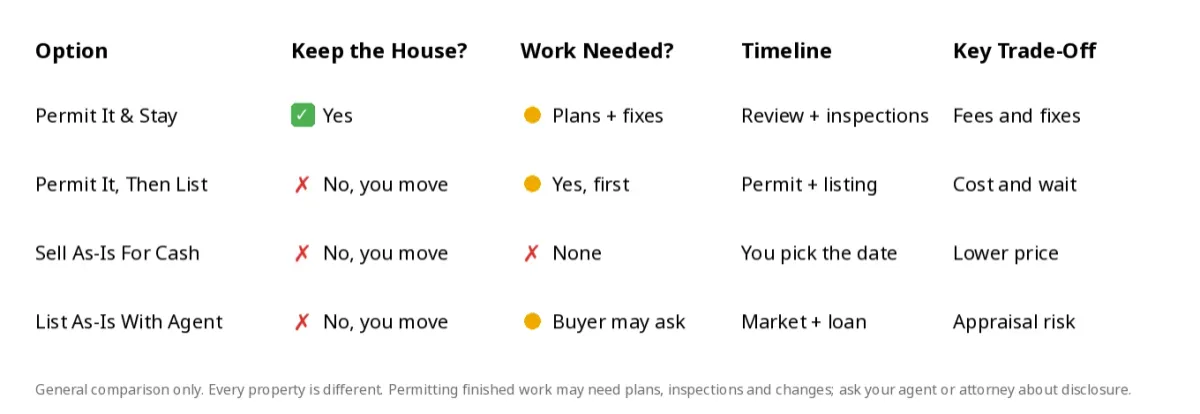
Options When a House Has Unpermitted Work
Some owners get the work permitted and inspected and then sell. Others list the house as-is with an agent, or sell it as-is for cash and let the buyer deal with permits after closing. The right path depends on what was built, whether it can pass inspection, your budget, your timeline and your goals.
1. Find Out What Was Done and What Was Permitted
Start by listing every change made to the house: rooms added, spaces converted, walls moved, circuits, plumbing and heating added. Then check what was permitted. Albuquerque permits are tracked through ABQ-PLAN, and the city's Building Safety Division can tell you whether an address has a permit on file. If water got into an addition through a poor connection to the house, see our guides on mold and foundation problems.
Places owners often check first:
- Garages, carports and patios turned into rooms
- Additions that do not match the original house
- Electrical panels, circuits and outlets added later
- Bathrooms, water heaters and gas lines moved or added
2. Permitting Work That Is Already Built
Local rules to know:
- Most building, electrical and plumbing work needs a permit
- Albuquerque may investigate work started without a permit
- Rio Rancho lists garage conversions as needing a permit
- In Albuquerque, rentals need a licensed contractor to pull the permit
New Mexico's residential code, as quoted in the state's residential building permit guide, says a building may not be constructed, enlarged, altered, repaired or converted without a permit. When work has already started without one, Albuquerque's administrative code allows a special investigation before a permit is issued and an investigation fee equal to the permit fee (2024 Uniform Administrative Code, section 112.4). Owners often call this an after-the-fact or as-built permit, and the city may ask for plans and changes before it signs off. You can check a contractor's license with the New Mexico RLD license lookup.
3. Permit, List or Sell As-Is
Owners often weigh things like:
- What permitting and any required corrections would cost compared with what the house is worth
- Whether they have the cash and time to manage plans and inspections
- A house that needs more work than they can pay for
- How a buyer, their appraiser and their lender are likely to react
4. Legal Help for Disclosure & Permit Questions
What you must tell a buyer, and what the city may require for work already built, depend on your facts, your contract and the property. A New Mexico real estate attorney or your agent can explain disclosure duties, and the building department can explain its permit process. This page is general information, not legal advice.
Helpful Resources:
What Albuquerque & Rio Rancho Require
Albuquerque's administrative code says no building may be erected, enlarged, altered, repaired, improved or converted without a permit, apart from a short list of exempt work such as one-story sheds up to 120 square feet and finish work like painting, tiling, cabinets and countertops. The city's homeowner permit guide treats enclosing an existing covered area, such as a patio cover, as a room addition, and says a garage conversion must be architecturally integrated with the house. It also notes that a project under construction or completely built without a permit may be charged a double permit fee. The city's Building Safety FAQs explain that when required work is done without a permit, a stop work order is issued, followed by a notification letter giving the owner 30 to 45 days to comply, and further steps if it is not resolved. Rio Rancho says permits are required for most minor repairs and remodel work, including garage conversions, plus additions, remodels, secondary structures of 121 square feet and over, and plumbing, mechanical and electrical work. Casitas have their own rules: Albuquerque changed its zoning in 2023 to allow casitas in R-1 neighborhoods throughout the city, with size and placement limits.
Common unpermitted work in local homes:
- Garages converted to bedrooms, dens or apartments
- Patios and carports enclosed into living space
- Room additions and second-story additions
- Casitas and guest houses with kitchens
- Added circuits, subpanels and outlets
- Moved or added bathrooms, gas lines and water heaters
What the city does when work is built without a permit:
City of Albuquerque: Building Safety FAQs
Albuquerque homeowner permit guide (PDF):
City of Albuquerque: Home Owner's Building Permit Guide
Casita zoning and permitting:
Unpermitted Work Disclosure When Selling in New Mexico
Disclosure is where many sellers feel stuck. In New Mexico, real estate brokers must disclose in writing any adverse material facts they actually know about a property (16.61.19.8 NMAC). The New Mexico REALTORS adverse material facts disclosure statement many sellers fill out has a use, zoning and legal section that lists un-permitted construction and repairs among the issues to describe, and it says sellers must disclose adverse material facts they actually know about even if they never lived in the house. Your exact duty depends on your contract and your facts, so ask your agent or a real estate attorney what to disclose. In general, telling buyers what was built, when, and whether it was permitted helps avoid disputes later.
Disclosure questions often come up when:
- A past owner did the work and left no records
- A permit was opened but never finaled
- The seller never lived in the house
- A buyer’s inspector flagged work that looks unpermitted
Papers that help when you disclose:
- Any permits, plans or inspection records you have
- Contractor names, contracts and receipts
- Dates and photos of when the work was done
- The county assessor record for the house
- Past inspection or appraisal reports
- Letters or notices from the city or county
- Any code enforcement notice about the property
Appraisals, Buyer Loans & Square Footage
Buyers usually find unpermitted work through the home inspection, the listing's square footage, or the appraisal. Fannie Mae's appraisal rules say that if the appraiser identifies an addition that does not have the required permit, the appraiser must comment on the quality and appearance of the work and its impact, if any, on the market value (Fannie Mae Selling Guide B4-1.3-05). HUD's FHA appraisal guidance counts room additions and garage conversions as living area only when the space is functionally reached from inside the house, has a permanent heat source and matches the design and quality of the main house; other space is reported separately (HUD Handbook 4000.1). Lenders can add their own rules, so a converted garage or enclosed patio may not count toward the square footage a buyer's loan is based on, and work that looks unsafe can lead to repair or inspection conditions. It also helps to compare what the house really has with the square footage and improvements on your county assessor record, since buyers and appraisers often look at both.
What sellers often run into:
- A buyer asking for permits or a lower price after inspection
- An appraisal that leaves out the converted space
- A loan that cannot close until safety items are fixed
- Buyers walking away and the house going back on the market
Helpful local resources:
Can You Sell a House With Unpermitted Work As-Is?
In many cases, yes.
Some New Mexico owners choose a direct cash sale in order to:
- Skip paying for plans, permits and inspections
- Avoid opening walls or redoing work to pass inspection
- Avoid inspection repair requests and buyer loan approval
- Avoid appraisal surprises over the square footage
- Close on a date that works for them
Selling may still be possible even if:
- The garage, patio or carport was converted without a permit
- A casita or addition has no permit on file
- The house also has fire damage
- The roof is worn out and needs replacing
- The city cited the property for code violations
- A past buyer backed out after the inspection
If the city has posted the house as unsafe to occupy, our guide to selling a condemned house covers that process. A house with unpermitted work can still be sold as long as known issues are disclosed in writing. We meet sellers in person at the house, walk through the additions and conversions with you, and plan for any permit work on our side after closing.
Inherited, Vacant & Rental Houses With Unpermitted Work
Inherited houses often come with projects nobody can explain: a converted garage, an extra bathroom or a back room with no paperwork, and the person who built it may no longer be around to ask. Rentals have their own rules. Under the New Mexico Uniform Owner-Resident Relations Act, a landlord must substantially comply with minimum housing codes that materially affect health and safety, and make repairs needed to put and keep the premises in a safe condition (NMSA 47-8-20). In Albuquerque, the city also says a licensed contractor must pull the permit for work on homes leased or rented to others.
Common issues include:
- No records of who did the work or when
- Not knowing who has the authority to sell or sign
- Tenants living in a converted garage or casita
- Permit costs nobody budgeted for
- Family members with different plans for the house
The person handling the estate can usually sell the house, and a probate or estate attorney can tell you who has the authority to sign. If tenants live there, our rental property selling guide covers selling with tenants in place.
Helpful resource:
Questions To Ask Before You Decide
Before permitting, listing or selling, owners usually think about:
- What the house would sell for as-is and with permits
- What plans, permit fees and corrections would really cost
- Whether the work could pass inspection without major changes
- Whether the space meets zoning rules, such as casita limits
- Whether any electrical or gas work could be unsafe
- Whether tenants live in the converted space
- Whether the house is part of an estate
Common sources of stress include:
- Not knowing which work was permitted
- Worry about the city getting involved
- Buyers backing out after an inspection
- A distressed house that needs more work than they can afford
- Worry about what has to be disclosed
- Not knowing what the house is worth as-is
Permit the Work First or Sell As-Is?
If you are deciding, owners usually:
- List each change and look up the permit history
- Ask the building department what it would need
- Get written bids from licensed contractors for plans and corrections
- Ask whether each bid includes permit fees and inspections
- Ask an agent what the house would sell for each way
Permitting the work can bring a higher price if you have the time and money and the inspections do not uncover bigger problems. Listing with an agent may work if the space is well built and buyers' lenders will accept it, while a direct cash sale trades some of the top price for speed: no permit process, no showings and a closing date you choose.
Ethan is also a licensed New Mexico real estate broker, so he can walk you through the selling paths, while your attorney answers disclosure and legal questions and the building department answers permit questions.
Albuquerque, Rio Rancho & New Mexico Permit Resources
Offices and legal help owners may contact:
Albuquerque: Building Permits · ABQ-PLAN · Building Safety FAQs · Casitas (ADUs) · Code Enforcement · 311 · Rio Rancho: Building Division · Get a Permit · Permit FAQs · Bernalillo County: Homeowner Projects & Permits
New Mexico & federal: Residential Building Permit Guide (CID) · RLD License Lookup · Contractor License Classes (14.6.6.9 NMAC) · Fannie Mae B4-1.3-05 · HUD Handbook 4000.1
Legal help: State Bar of New Mexico · New Mexico Legal Aid
Important Reminder
Every property and every project is different.
What was built, when, whether it is safe, what the city or county may require, what has been disclosed before, tenants and who owns the house can all affect your price, timeline and options.
The earlier you gather records, check the permit history and get good information, the more options you may have available.
FAQ
Can I sell a house with unpermitted work in Albuquerque?
Yes. Houses with unpermitted additions, garage conversions and other work are sold in Albuquerque and Rio Rancho, either after the work is permitted or as-is. Known issues should be disclosed in writing, and the price and type of buyer usually depend on what was built, how well it was done and whether it could pass inspection.
Do I have to disclose unpermitted work when selling in New Mexico?
The New Mexico REALTORS adverse material facts disclosure statement lists un-permitted construction and repairs in its use, zoning and legal section, and brokers must disclose adverse material facts they know about. Your exact duty depends on your contract and situation, so ask your agent or a real estate attorney.
Can I get a permit for work that is already done?
Often you can apply. Albuquerque's administrative code allows a special investigation before a permit is issued for work started without one, with an investigation fee equal to the permit fee, and the city may ask for plans, inspections and changes. Rio Rancho asks owners to call its permit office before starting projects. Whether the work can pass depends on how it was built.
Will an appraiser count an unpermitted garage conversion as living space?
Not always. Fannie Mae requires appraisers to comment on the quality of an addition without permits and its effect on value, and HUD's FHA guidance counts additions and garage conversions as living area only when they are reached from inside the house, have a permanent heat source and match the main house. Space that does not meet those tests is reported separately.
Can I do my own electrical or plumbing work in New Mexico?
The state's residential building permit guide says a homeowner may not do electrical, plumbing or mechanical work unless the homeowner applies for and passes the required Construction Industries Division exam for that work. In Albuquerque, permits for homes leased or rented to others must be pulled by a licensed contractor. Check with your local building department before starting.
How does your process work for a house with unpermitted work?
Call (505) 300-2234 or send us the address. We meet sellers in person at their homes, so Ethan meets you at the property, walks through the additions and conversions with you, and goes over your numbers and options. You don't need to permit the work or hire a contractor first. If a cash sale fits, you choose the closing date.
Ready To Talk About the House?
If a buyer's inspector asked about permits, the square footage does not add up, or you inherited a house full of do-it-yourself projects, understanding your options early can give you more choices and more control.
Some homeowners choose to:
- sell without permitting the work first
- skip plans, contractor bids and inspections
- avoid inspection repair requests
- avoid waiting on a buyer's loan approval
- avoid appraisal questions about square footage
- sell as-is for cash on their own timeline
Every situation is different, so talk with your agent or attorney about disclosure before you decide.
Ready To Sell Your House Fast In Albuquerque?
Get a fair cash offer from a local Albuquerque home buyer.
No pressure. No obligation.
Follow Us


Other
We Help With
We Buy Houses In
This is not legal, financial, or tax advice. For specific answers tailored to your situation, we always recommend consulting your trusted professionals. Some members of NM Cash Offer LLC are licensed real estate brokers in the State of New Mexico. NM Cash Offer LLC does not represent any Sellers in this transaction unless a separate written listing agreement is executed. Click to see Broker Disclosure.
© Copyright 2026 NM Cash Offer LLC. All Rights Reserved.